



Texture or Pattern: Which Rug Ages Better
A solid textured rug ages more quietly than a patterned one, while a patterned rug hides wear and stains better in its early years. Which one ages better depends on what you fear more: a rug that shows life, or a rug that goes out of style.
In short
- A textured solid rug usually ages better in taste, because texture and a single colour do not date the way a fashionable pattern can.
- A patterned rug usually ages better in wear, because a busy surface hides stains, dust and traffic paths that a plain colour shows.
- A tone on tone rug, such as a carved or handloom rug in one colour family, sits between the two: it has texture to hide wear and no loud pattern to date.
- At Rugberry, a handloom Grain rug starts at ₹29,600, a carved Lamina rug at ₹32,000 and a patterned wool and Botanical Silk rug such as Velocity at ₹32,800, all for 5x8 ft ex GST, at the time of writing.
What does ageing well mean for a rug?
A rug ages well when it still looks right in your home after years of daily use and after the room around it has changed. That has two parts: how the material wears, and how the design holds up as taste and furniture move on.


Material wear is about fibre and construction. A dense New Zealand wool pile springs back, sheds less after the first months and takes cleaning well, whether the rug is plain or patterned. Design wear is about whether you still want to look at it. A rug may be physically sound at ten years and still feel tired.
So the question is really two questions. Which surface hides the wear of daily life? And which design survives a new sofa, a repainted wall and a move to a new flat? Our guide to how long a rug lasts covers the material side in depth.
How do textured and patterned rugs age over ten years?
Over ten years, a patterned rug looks better in the first few, and a textured rug looks better at the end. The crossover usually comes around year five, when wear has settled and taste has begun to move.
| Stage | Textured solid or tone on tone | Patterned, two or more colours |
|---|---|---|
| Year one | Shows traffic paths and shading; first shedding visible on dark colours | Hides shedding, footprints and small spills |
| Year three | A gentle patina; texture hides most marks if the colour is a mid tone | Still fresh; a strong pattern may start to feel familiar |
| Year five | Settled and calm; easy to restyle with new cushions and art | Wears well, but may clash with new furniture or wall colour |
| Year ten | Often looks better than new, as the fibre softens and the colour mellows | Either a loved signature piece or the first thing you want to replace |
| When you move home | Fits almost any room | Needs the right room to work |
The verdict: for a rug you expect to keep through more than one home, choose texture over pattern, because a single colour with surface interest adapts to any room. For a rug in a busy family room you expect to replace within five years, choose pattern, because it hides life best.
Why does texture hide wear differently from pattern?
Pattern hides wear by distraction: the eye follows the design and misses the mark. Texture hides wear by breaking up light: a surface of ridges, grooves or weave never shows one flat shiny patch where people walk.


A flat, smooth solid is the hardest surface to keep looking new, because every traffic path, crushed patch and stain stands out against it. Add texture, and much of that disappears. A carved groove, a visible handloom weave or a two colour mottle each scatter the light so wear blends in.
That is why the useful comparison is not plain against patterned, but flat against textured. A textured solid gets most of the wear hiding benefit of pattern without its risk of dating. Our posts on dust and rugs in India and handmade rug irregularities explain how surface variation helps.
Pattern hides yesterday's spill. Texture hides the next ten years.
Which Rugberry rugs sit on each side of the choice?
Rugberry's range covers all three positions: textured solids, tone on tone carved rugs and patterned rugs. Each is listed in six standard sizes and can be made in any size or colour.

Textured solids
The Grain Wool Rug in Umber is handloom New Zealand wool at 12 to 14 mm, low and closely textured with the weave visible underfoot, from ₹29,600 for 5x8 ft. Browse the full range in textures and solids.
Tone on tone
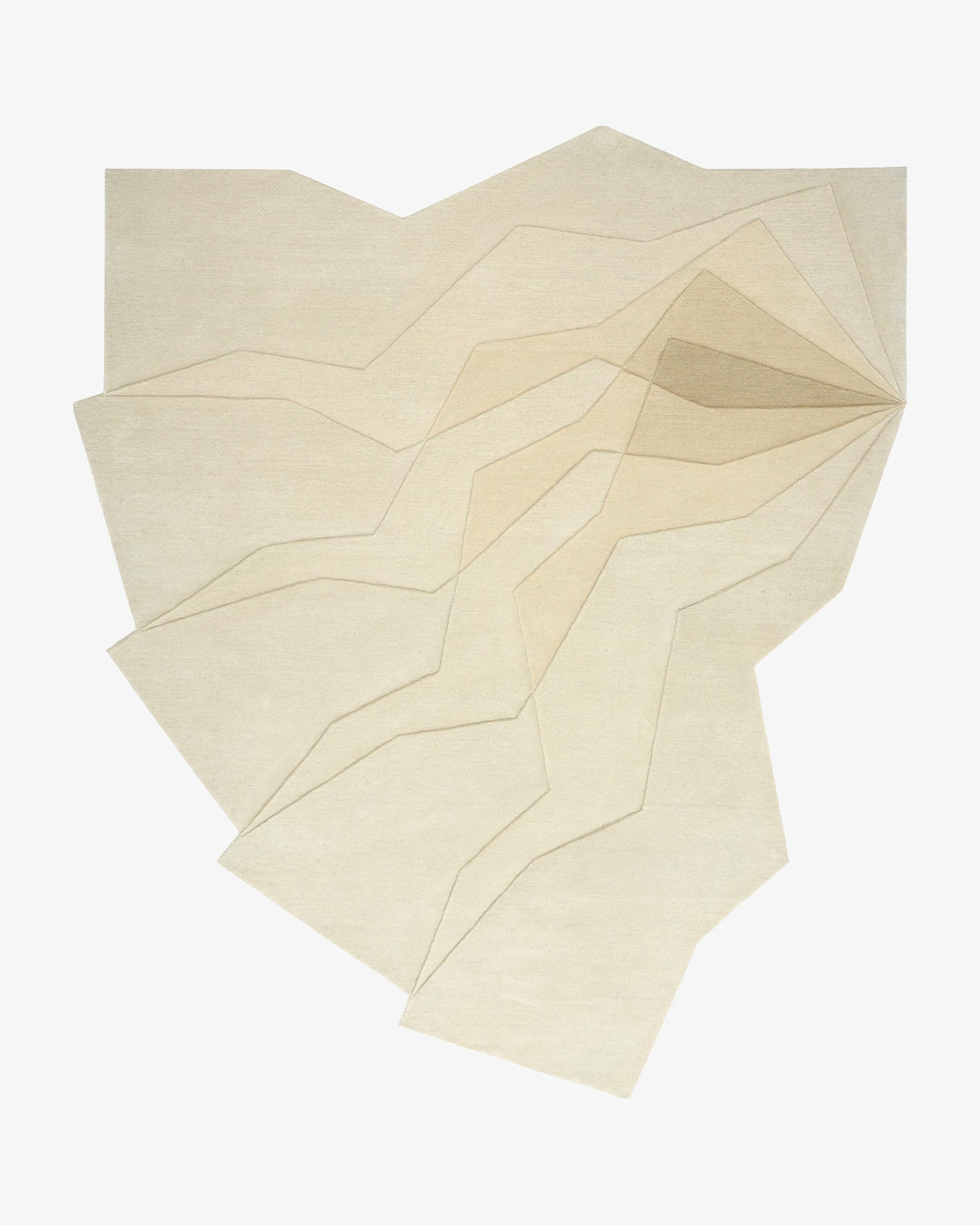
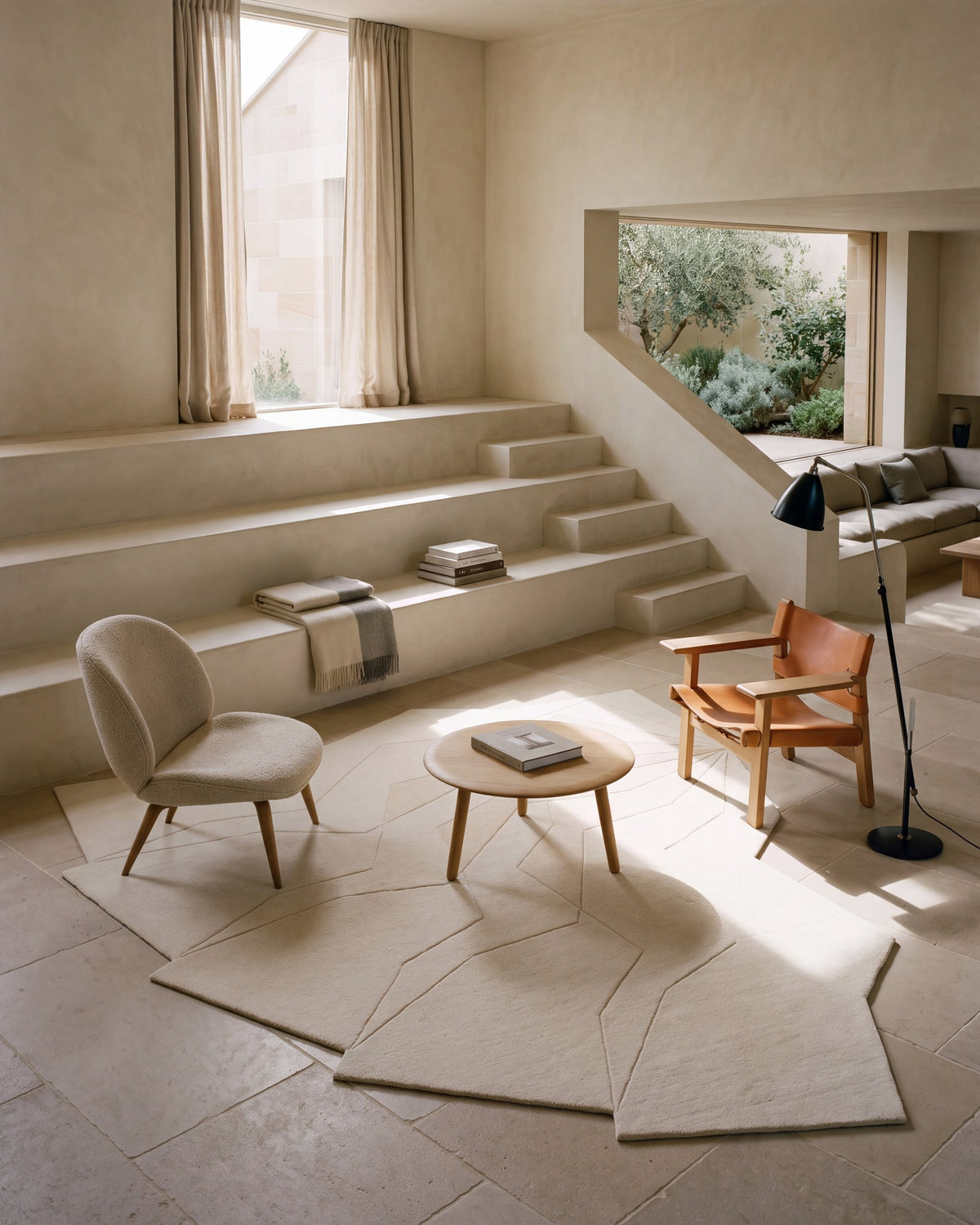
The Lucid Wool Rug is hand tufted New Zealand wool at 14 to 16 mm, its planes folding toward a single point, each a shade lighter than the last, from ₹32,000. It belongs to the carved Lamina collection.
Patterned
The Velocity Wool & Silk Rug is hand tufted New Zealand wool and Botanical Silk at 14 to 16 mm, drawn in fast directional strokes, from ₹32,800. More designs are in pattern rugs.
All prices are ex GST, at the time of writing.
Which should you choose for your room?
Choose texture if your furniture, wall colours or home are likely to change in the next five years, and pattern if the rug is the anchor of a room you have already finished. Then match the decision to the room's daily load.
- Rented home or first home: texture, since it will move with you. See rugs for a rented home.
- Finished living room with plain upholstery: pattern, to give the room its focal point.
- Room with patterned sofa or curtains: texture, to avoid two patterns competing. See a rug with a patterned sofa.
- Family room with children and pets: pattern or a strongly textured mid tone.
- Bedroom: texture, for a calm floor.
- Formal drawing room for guests: either; tone on tone gives both calm and interest.
If you are torn, a tone on tone rug is the safe middle ground: it has a design you can see in the right light, but reads as one colour when the room changes around it.
Does colour matter more than texture or pattern?
Colour matters as much as the choice between texture and pattern, because colour decides how much daily life a rug shows. A mid tone textured rug often hides more than a pale patterned one.

Very pale rugs, ivory and white, show dust, footprints and every chai spill, whatever their surface. Very dark rugs, charcoal and black, show pale lint, pet hair and the dust that settles from open windows. Mid tones, such as sand, tan, sage, umber and taupe, hide both, which is why they are the safest long term choice in Indian homes.
- Pale and textured: beautiful in a quiet bedroom, demanding in a living room.
- Mid tone and textured: the most forgiving combination for a family home.
- Pale and patterned: the pattern hides some marks, the pale ground still shows dust.
- Dark and patterned: hides stains, shows lint; good with dark wood floors.
Colour also dates, though more slowly than pattern. A fashionable colour, such as a strong teal or a bright ochre, ties a rug to a moment; a natural, undyed looking tone does not. If you want the rug to outlast two or three rounds of redecorating, choose a mid tone close to natural wool or stone and let texture carry the interest.
Light changes the answer too. A rug in strong afternoon sun will mellow over the years, and a textured mid tone mellows gracefully, while a high contrast pattern can fade unevenly where furniture shades part of it. Turning the rug and drawing a sheer curtain in summer keep the change even. Our guides to choosing a rug colour and neutral rugs go further.
How do you make either kind last longer?
Either kind lasts longer with the same four habits: vacuum weekly, turn the rug every six months, keep it out of harsh direct sun and deal with spills at once. Fibre and construction matter more to lifespan than whether a rug is plain or patterned.
- Turn it: turning end to end every six months spreads both traffic and sun, so neither half wears or fades first.
- Protect it from sun: afternoon sun through glass fades dyed wool; a sheer curtain in summer helps. See rug fading in sunlight.
- Use an underlay: on marble and tile, an underlay reduces wear from the floor below and keeps the rug flat.
- Restyle around it: new cushions, throws and art refresh a textured rug every few years at little cost.
Our daily rug care routine sets out a schedule. For the bigger picture, read patterned vs plain rugs and the ten rug textures guide.
One practical test helps when you cannot decide. Photograph your room as it is, then imagine it with a different sofa and a new wall colour in five years. If the rug you are considering still looks right in that picture, it will age well for you, whether it is textured or patterned. Interior designers often run this test with clients before specifying a rug for a long term project.
Frequently asked questions
Does a textured rug or a patterned rug age better?
A textured rug usually ages better in style, because a single colour with surface interest does not date. A patterned rug hides wear and stains better in its early years.
Do plain rugs show dirt more than patterned rugs?
A flat, smooth plain rug shows dirt more than a patterned rug. A textured plain rug, with a visible weave, carving or mottle, hides much of that dirt while staying calm.
What is a tone on tone rug?
A tone on tone rug uses several shades of one colour, often with texture, so it shows a design in the right light but reads as one colour. Rugberry's carved Lamina rugs are tone on tone.
Which rug is best if I plan to move home?
A textured solid or tone on tone rug is best if you plan to move, because it fits almost any room. A strong pattern needs the right room to work.
How much does a textured rug cost at Rugberry?
At the time of writing, the handloom Grain Wool Rug starts at ₹29,600 for 5x8 ft and the carved Lamina rugs at ₹32,000, ex GST. Grain and the rectangular Lamina rugs are listed in six standard sizes; Facet, the round Lamina rug, comes in three diameters.
Buy for the decade, not the season. Material first.




Leave a comment
This site is protected by hCaptcha and the hCaptcha Privacy Policy and Terms of Service apply.