



The Ten Rug Textures: A Visual Guide
Every Rugberry rug is built from one of four constructions and finished in one of ten surface textures: five in cut pile and five in loop pile. This guide sets out all ten in one place, so you can name the surface you want before you choose a colour.
In short
- Rugberry works in ten rug textures: five cut pile textures (Ombré, Carving, High-Low, 2 Colour Mottling, Gabbeh Dyed) and five loop pile textures (2 Colour Mottling, Overtuft Scattered, Micro Loop, Tip Shear, Straight Line).
- Cut pile textures have the yarn tips cut open, which feels soft and velvety; loop pile textures keep the yarn as closed loops, which feels firmer and wears harder.
- In the current Rugberry range, the Solaris collection shows Ombré and the Lamina collection shows Carving; every other texture is made to measure in any size or colour.
- At the time of writing, Solaris rugs start at ₹35,200 and Lamina rugs at ₹32,000 for 5x8 ft, ex GST.
What is the difference between cut pile and loop pile?
Cut pile has the tops of the yarn loops sheared open, so you walk on the ends of the fibre; loop pile leaves the loops closed, so you walk on their sides. That one difference decides how a rug feels, how it wears and which textures it can carry.


Open tips bloom and lean, so cut pile feels soft and shows a gentle play of light called shading. Closed loops stay upright and spring back, so loop pile feels firmer, hides footprints and resists crushing. A cut tip cannot be snagged by a claw; a loop can.
The choice of pile comes first, and the texture follows from it. Some effects, such as a carved groove, need the open, even surface of cut pile. Others, such as a ribbed line, need the upright structure of loop. Our glossary defines cut pile and loop pile.
What are the ten rug textures at a glance?
The ten textures differ in what creates them: colour, a cut, a height, a mix of yarns, or the way loops are set. The table below sets them side by side, with the Rugberry guide for each.
| Texture | Pile | What creates it | Feel | Where to see it at Rugberry |
|---|---|---|---|---|
| Ombré | Cut | A planned gradient of colour, end to end | Even, soft | Solaris collection |
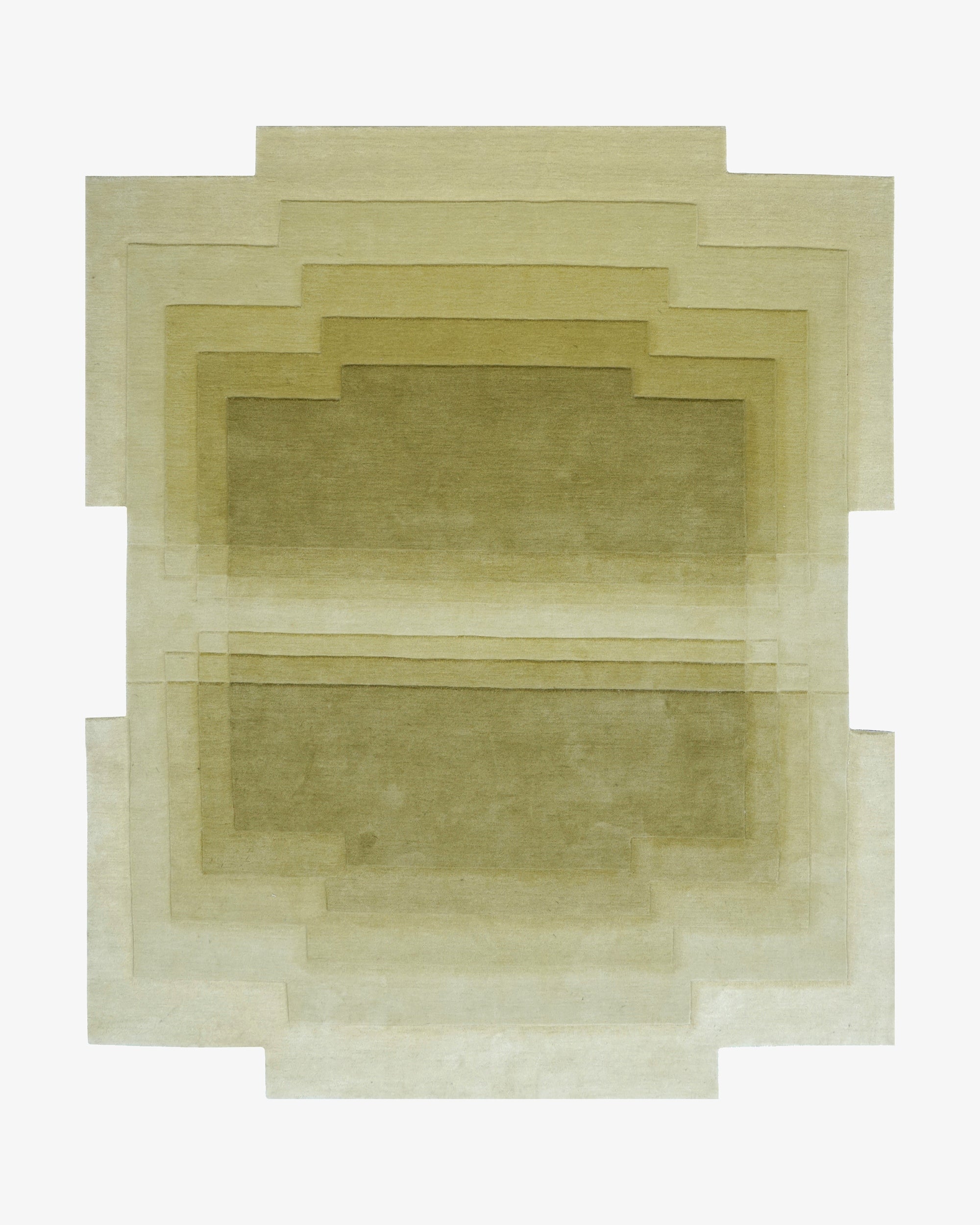
| Carving | Cut | A groove cut along an outline | Level, fine channels | Lamina collection |
| High-Low | Cut | Two or more pile heights | Stepped | Made to measure |
| 2 Colour Mottling | Cut | Two yarn colours in one tuft | Soft, speckled | Made to measure |
| Gabbeh Dyed | Cut | Uneven, banded dyeing | Even, colour drifts | Made to measure |
| 2 Colour Mottling | Loop | Two yarn colours in one loop | Firm, beaded | Made to measure |
| Overtuft Scattered | Loop | Raised tufts over a low loop ground | Nubbly, varied | Made to measure |
| Micro Loop | Loop | Very short, tight loops | Flat, firm | Made to measure |
| Tip Shear | Loop | Tall loops sheared open beside low loops | Nearly level, two textures | Made to measure |
| Straight Line | Loop | Loops set in parallel rows | Ribbed, directional | Made to measure |
Each texture has its own guide: carving, two colour mottling, Gabbeh dyed, micro loop, tip shear, overtuft scattered and straight line. Ombré and High-Low are covered in ombre dyeing and high low pile rugs.
What are the five cut pile textures?
The five cut pile textures are Ombré, Carving, High-Low, 2 Colour Mottling and Gabbeh Dyed. Two work through colour, two through the shape of the pile, and one through both.


Ombré
A slow gradient of colour from one end of the rug to the other, planned and even. Rugberry's Solaris collection is nine Ombré rugs in hand tufted New Zealand wool at 14 to 16 mm, such as the Ombré Haze Rug, a slow gradation of pale tone, from ₹35,200 for 5x8 ft.
Carving
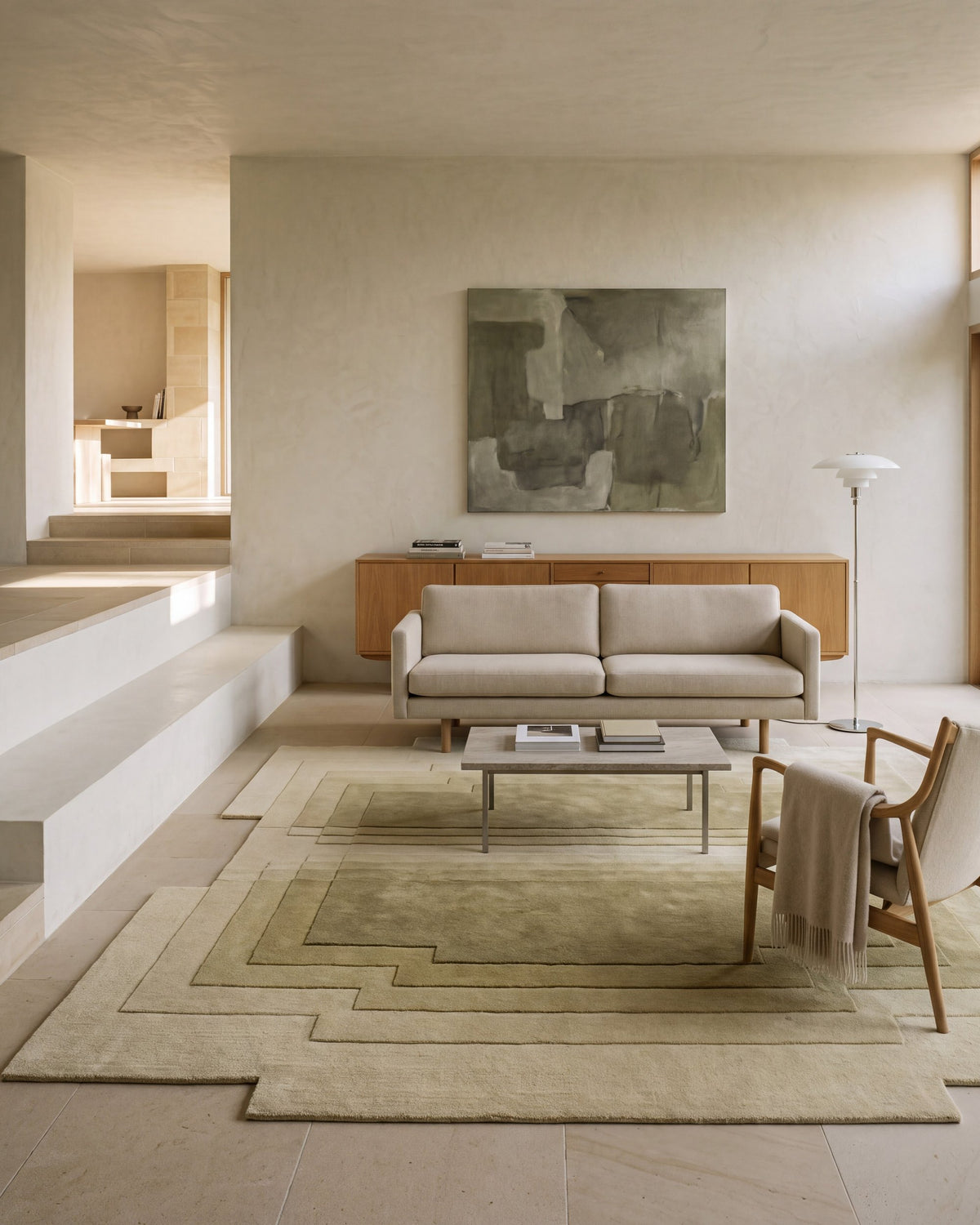
A groove cut into the finished pile along the edge of a shape, so shadow draws the design. Rugberry's Lamina collection is five carved rugs, such as the Talus Wool Rug in green tones, hand tufted New Zealand wool from ₹32,000 for 5x8 ft.
High-Low
Two or more pile heights in one rug, so parts of the design stand proud. It gives the deepest relief of the cut pile textures and is often combined with carving.
2 Colour Mottling
Two yarn colours fed into each tuft and sheared open, giving a soft heathered speckle that hides daily dust.
Gabbeh Dyed
Yarn dyed unevenly so one colour drifts through lighter and deeper bands, recalling the old Gabbeh rugs.
What are the five loop pile textures?
The five loop pile textures are 2 Colour Mottling, Overtuft Scattered, Micro Loop, Tip Shear and Straight Line. All keep the yarn as loops, and each varies the loops in a different way.

- 2 Colour Mottling: two colours in each loop, a crisp beaded speckle. The only texture Rugberry offers in both pile families.
- Overtuft Scattered: raised tufts scattered over a low loop ground, a natural, tactile surface.
- Micro Loop: very short, tight loops, flat and firm, ideal under chairs.
- Tip Shear: tall loops sheared open beside low loops, so cut and loop draw a tone on tone pattern.
- Straight Line: loops set in parallel rows, a ribbed surface with a direction.
Loop textures are the working textures of the ten. They suit studies, dining rooms, passages and entrances, where a rug meets castors, chair legs and shoes. The one caution is pets that scratch, since a claw can catch a loop.
Name the surface first. Colour can change; texture decides how a rug lives.
Which texture suits which room?
Choose a cut pile texture for rooms where people sit and walk barefoot, and a loop pile texture for rooms where things roll or shoes stay on. Within each family, pick the texture that matches the light and the amount of daily life the room sees.

- Living room with strong side light: Carving, because the low sun draws its lines.
- Calm bedroom: Ombré or a quiet cut pile mottle, both soft and even underfoot.
- Family room with children and a dog: cut pile 2 Colour Mottling, which hides marks and cannot snag.
- Farmhouse or relaxed living room: Gabbeh Dyed, whose colour feels gathered rather than designed.
- Study with a castor chair: Micro Loop.
- Dining room: Micro Loop or Straight Line, running with the table.
- Passage or runner: Straight Line or loop pile mottling.
- Reading corner or meditation room: Overtuft Scattered, best felt barefoot.
- Formal drawing room: Tip Shear, for a quiet pattern that wears well.
Our living room rug ideas and bedroom rug ideas show these choices in real layouts.
How do texture, construction and fibre fit together?
Texture is the last of three choices, after fibre and construction. Fibre sets how the rug feels and ages, construction sets how it is built, and texture sets what its surface does.
Rugberry's four constructions are handloom, hand knotted, hand tufted and hand woven. The handloom Studio Collection lines, such as Grain and Plush, carry their texture in the weave itself: Grain is low and closely textured at 12 to 14 mm, Plush deep and soft at 18 to 20 mm. The ten named textures are most often built by hand tufting, which can place cuts, heights, loops and colours exactly where a design needs them.
- Grain Wool Rug in Sage: handloom New Zealand wool, the weave visible underfoot, from ₹29,600 for 5x8 ft.
- Plush Wool Rug in Sand: handloom New Zealand wool with a deep, quiet pile, from ₹32,000.
Prices are ex GST, at the time of writing. Read the four rug constructions explained and rug fibre grades for the other two choices, and the rug provenance card for where all three are written down.
Which textures cope best with Indian weather and dust?
Textures with a mixed or broken surface cope best with Indian dust, and low, firm textures cope best with monsoon humidity. Two colour mottling, Gabbeh dyed colour and the loop textures hide dust; micro loop and straight line dry fastest after a spill.
Dust is the daily test in most Indian cities. A flat, pale cut pile shows it within days, while a mottle or a drifting colour holds it out of sight until the weekly vacuum. In the monsoon, a deep pile dries slowly after a spill, so a low loop is the safer choice near a balcony door or in a coastal home.
- Delhi NCR and other dusty cities: mottling or Gabbeh dyed in mid tones.
- Mumbai, Chennai, Kolkata and Goa: low loop textures near openings, cut pile in air conditioned bedrooms.
- Bengaluru and Pune: almost any texture works in the milder climate; choose by light and use.
Read dust and rugs in India for a care routine that suits every texture.
How do you order a texture that is not in stock?
You order any of the ten textures through Rugberry's made to measure service, in any size, shape or colour, on a Rugberry design or your own. Name the texture, the colour and the size, and ask for a swatch before the rug is made.
A swatch matters more for texture than for colour, because texture changes with light and touch. Lay it on your floor, look at it in morning and evening light and press a chair or a bare foot onto it. Our guide to ordering a rug swatch lists the tests.
Textures can also be combined: a carved outline filled with a mottle, a straight line rug with an overtufted border, an Ombré field with carved steps. Brief the combination in plain words and the team will translate it into a design. Our guide to custom rugs at Rugberry walks through the process.
Frequently asked questions
How many rug textures does Rugberry offer?
Ten, split evenly between cut pile and loop pile. 2 Colour Mottling is made in both families, so there are nine texture names in all. Each one changes how a rug takes light, footfall and cleaning, so choose the texture with the room in mind.
Is cut pile or loop pile more durable?
Loop pile is usually more durable, because closed loops resist crushing and hide footprints. Cut pile is softer underfoot and safer with pets, since a claw cannot snag an open tip.
Which Rugberry collections show a named texture?
The Solaris collection shows Ombré and the Lamina collection shows Carving. Both are hand tufted New Zealand wool at 14 to 16 mm, from ₹35,200 and ₹32,000 for 5x8 ft respectively, ex GST, at the time of writing.
Which rug texture hides dirt best?
2 Colour Mottling hides dirt best, because a mixed two colour surface gives marks nothing to stand out against. Gabbeh Dyed and loop pile textures also hide dust well.
Can I combine two textures in one rug?
Yes. Rugberry can combine textures in a made to measure rug, such as a carved outline with a mottled fill. Ask for a swatch of the combination before the rug is made.
Ten surfaces, one standard. Material first.



Leave a comment
This site is protected by hCaptcha and the hCaptcha Privacy Policy and Terms of Service apply.