



Carving: The Rug Texture That Draws With a Blade
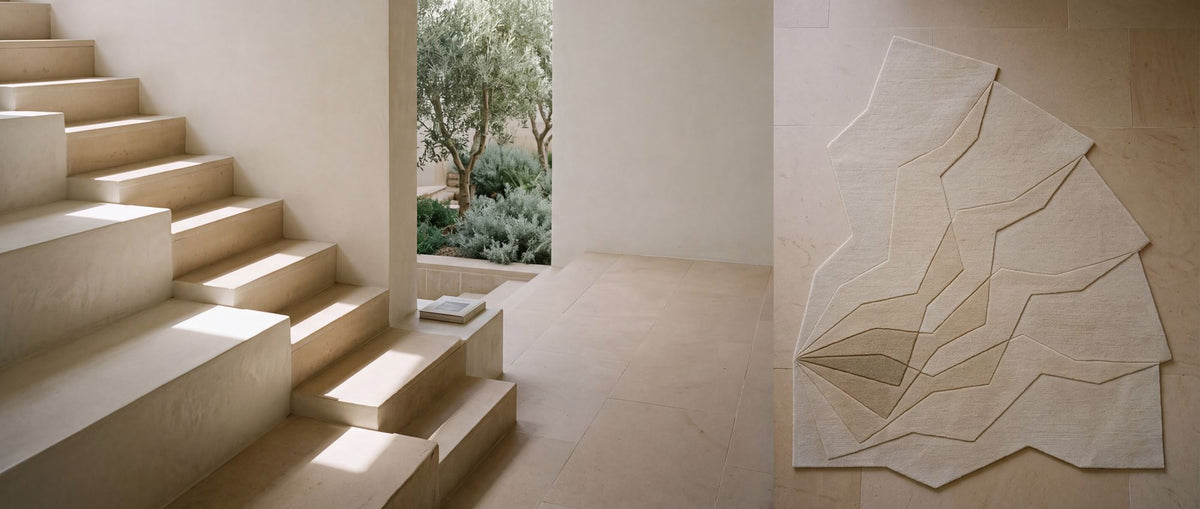
A carved rug has lines cut into its finished pile with a blade, so the design is drawn by shadow rather than by a change of colour. Carving is one of the five cut pile textures Rugberry works in, and the Lamina collection is built on it.
In short
- Carving is a cut pile rug texture in which a narrow groove is cut into the finished pile by hand, so the edge of each shape catches light and casts a fine shadow.
- Rugberry lists carving as one of its five cut pile textures, alongside Ombré, High-Low, 2 Colour Mottling and Gabbeh Dyed.
- Rugberry's Lamina collection is five carved rugs in hand tufted New Zealand wool at 14 to 16 mm: Cavea, Cadence, Facet, Lucid and Talus.
- At the time of writing, Lamina rugs start at ₹32,000 for 5x8 ft ex GST, and Facet, made entirely to measure, starts at ₹22,700.
What is a carved rug, exactly?
A carved rug is a pile rug in which a craftsperson cuts a shallow channel along the edge of a shape after the rug is made. The channel separates two areas of pile, so each area stands as its own soft plane.


Carving changes no colour. It works by removing a little height along a line, which opens a gap that light cannot fill. In a room lit from one side, that gap reads as a drawn line, and the line moves as you walk past.
This is why carving belongs to the cut pile family of textures. The yarn tips are cut open, so the surface is soft and even, and the carved line is the only interruption. On a loop pile rug there is no open tip to sculpt, which is why loop textures use different tools. Our glossary entries for carving and cut pile set out the terms.
How is a carved line made?
A carved line is made in three passes once the rug has been tufted, backed and sheared level: the line is marked, the pile is opened along it, and a blade trims the walls of the groove. The order matters, because the groove can only be cut into a finished, even surface.


- Shear the field level. The whole surface is sheared to one height first, here 14 to 16 mm. A level field is what makes the groove read as a clean line.
- Part the pile. Along the marked outline, the pile is combed apart so the base of each tuft can be seen.
- Cut the walls. Electric carving shears or hand blades trim the pile at an angle on one or both sides, leaving a V or a stepped channel.
- Brush and check. The groove is brushed, checked under side light and touched up until the line runs evenly from end to end.
The angle of the cut changes the look. A steep, narrow cut gives a crisp pencil line; a wide, shallow bevel gives a softer, sculpted edge. The rug shearing guide covers the levelling step in more detail.
How is carving different from High-Low?
Carving cuts a line into one pile height, while High-Low builds two or more pile heights into the same rug. Both are cut pile textures, and they are often used together, but they create relief in different ways.
| Question | Carving | High-Low | Ombré |
|---|---|---|---|
| What makes the design visible? | A groove cut along an outline | Areas of different pile height | A slow change of colour |
| When is it made? | After shearing, by hand | During tufting, then sheared | In the dyeing and colour placement |
| What it looks like in flat light | Quiet, nearly solid | Visible as a raised plane | Clear in any light |
| What it looks like in side light | Strong drawn lines | Deep shadows at each step | Little change |
| Feel underfoot | Even, with fine channels | Uneven, soft steps | Even |
| Rugberry example | Lamina collection | Made to measure | Solaris collection |
The verdict: for a calm room where you want the rug to read as one colour by day and show its drawing at dusk, choose carving over High-Low, because the surface stays level underfoot. Our explainer on high low pile rugs covers the stepped alternative.
Which Rugberry rugs are carved?
The five rugs of Rugberry's Lamina collection are the carved rugs in the current range. Each is hand tufted in New Zealand wool at 14 to 16 mm, in one colour family stepped tone by tone, with the change of tone carved apart.

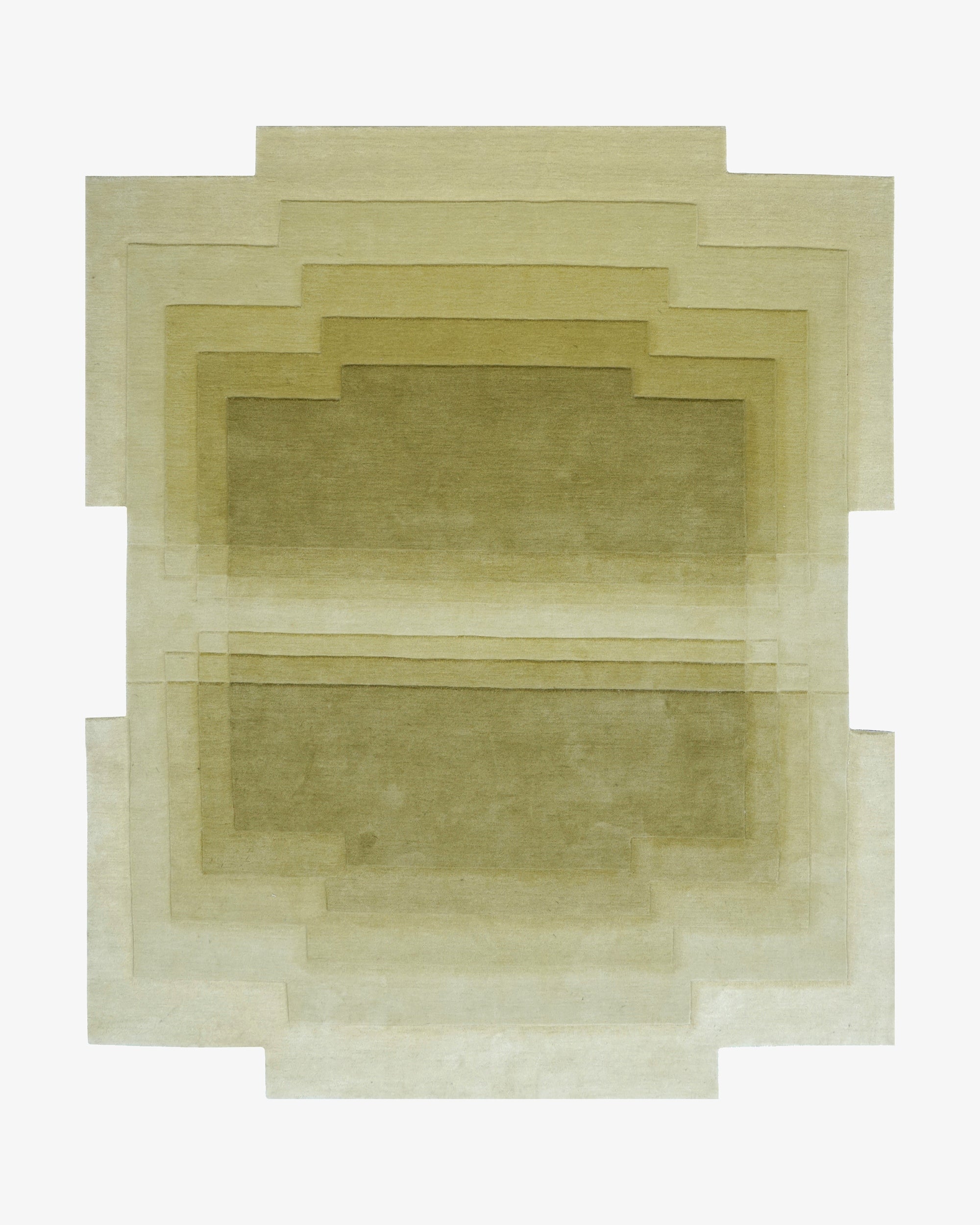
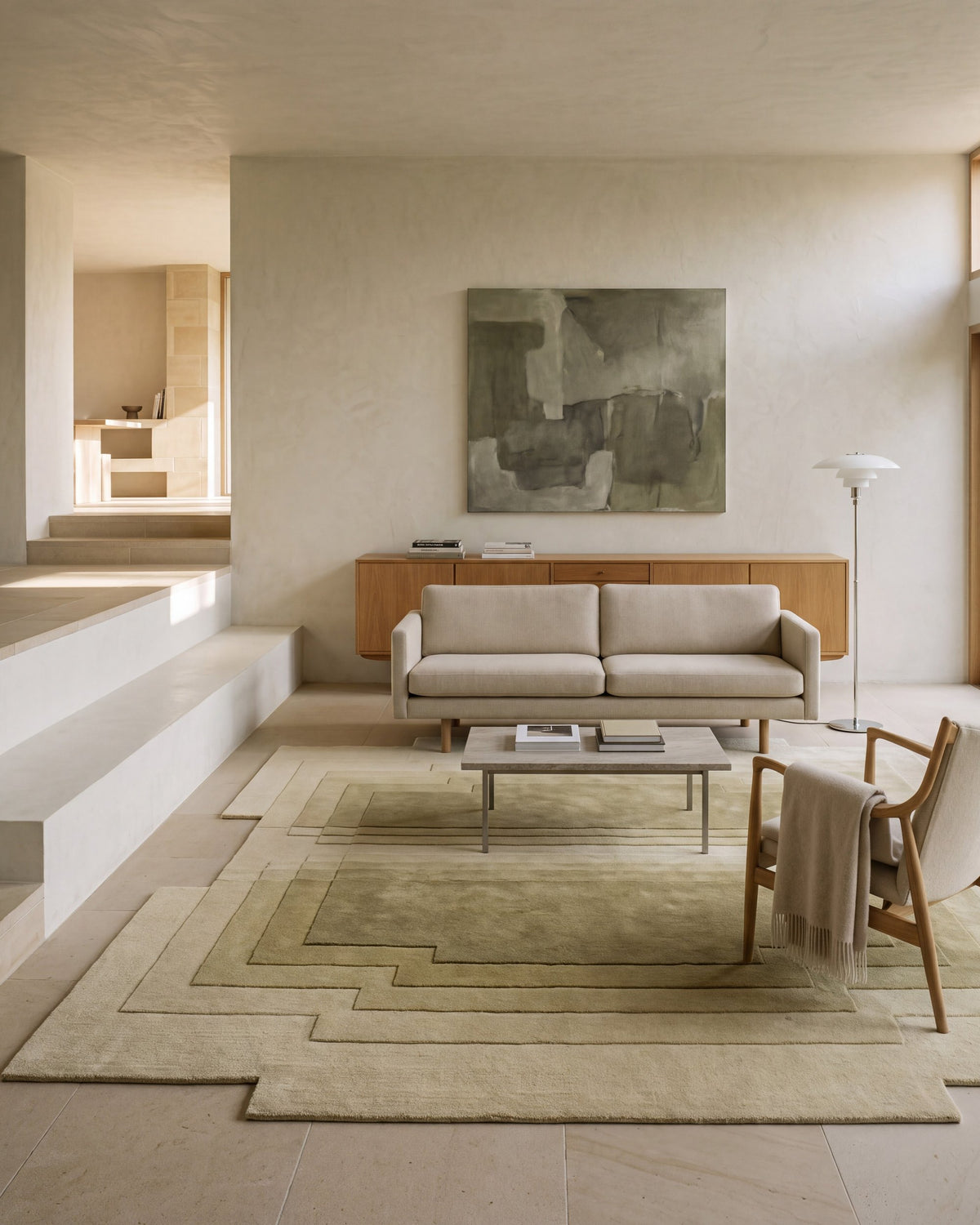
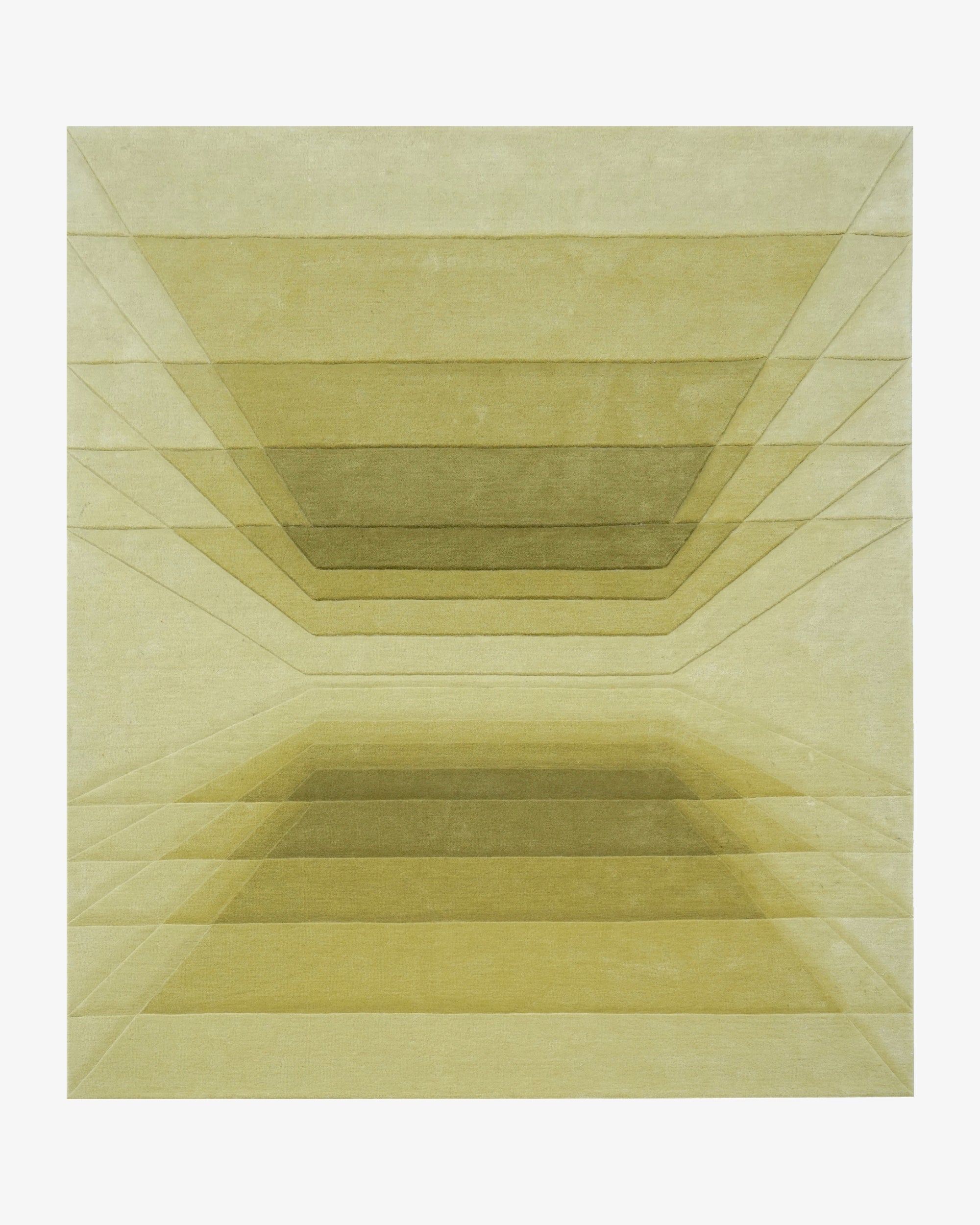
- Cavea Wool Rug: nested rectangles that seem to step down toward the centre, from ₹32,000 for 5x8 ft at the time of writing.
- Talus Wool Rug: carved in green tones, soft and even underfoot with a dense pile, from ₹32,000.
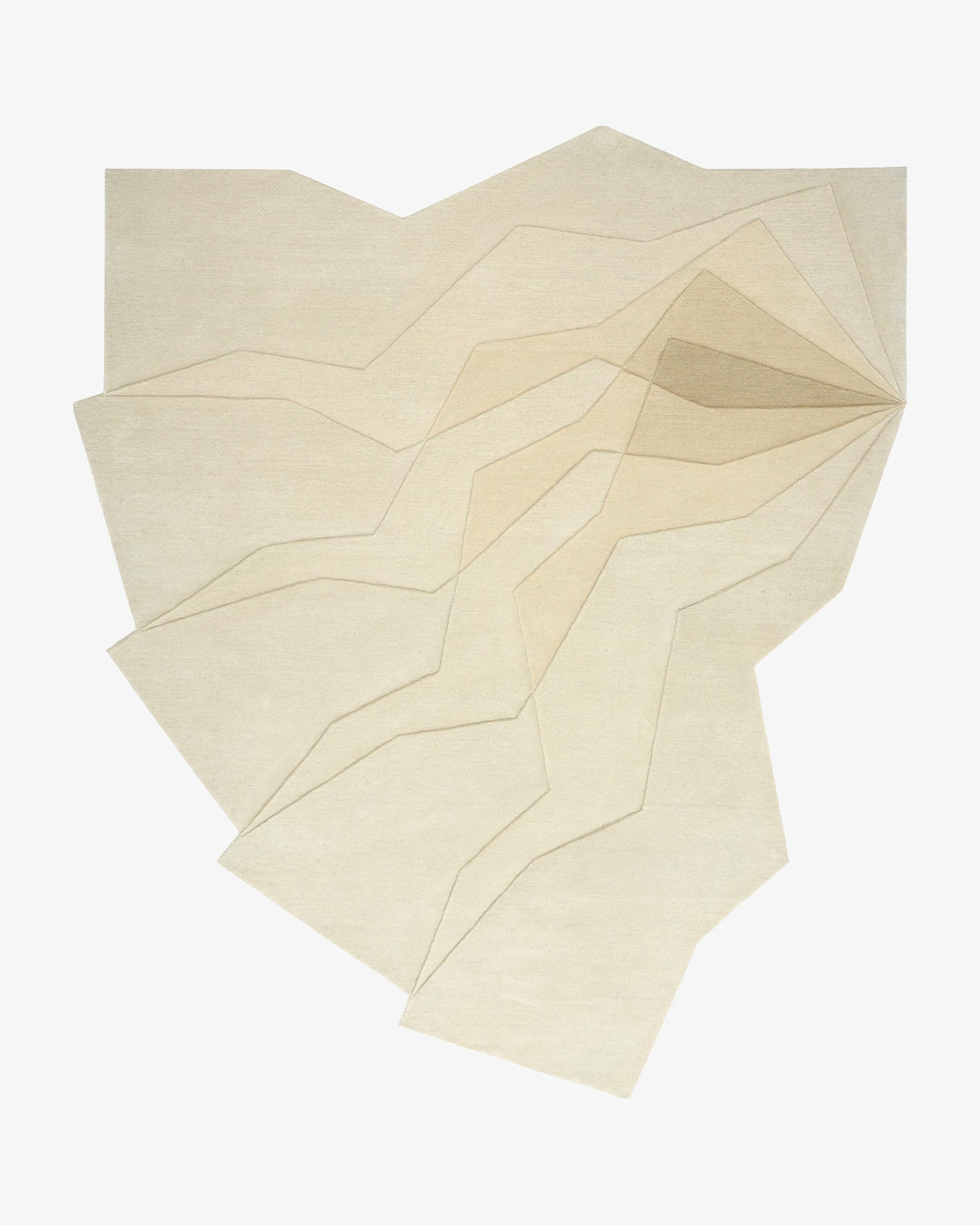
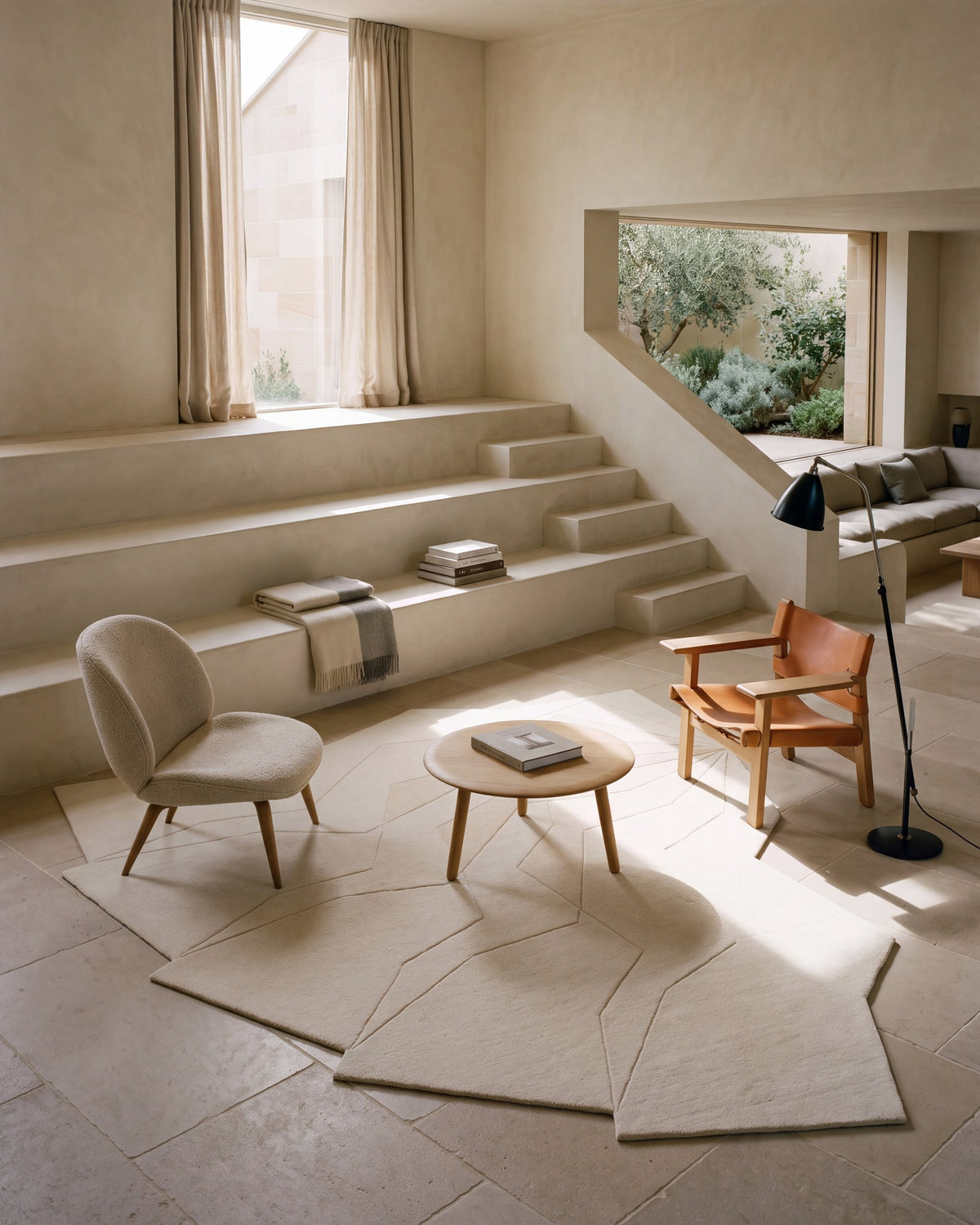
- Lucid Wool Rug: planes folding toward a single point, each a shade lighter than the last, from ₹32,000.
- Cadence Wool Rug: stepped bands that shift tone from edge to edge, from ₹32,000.
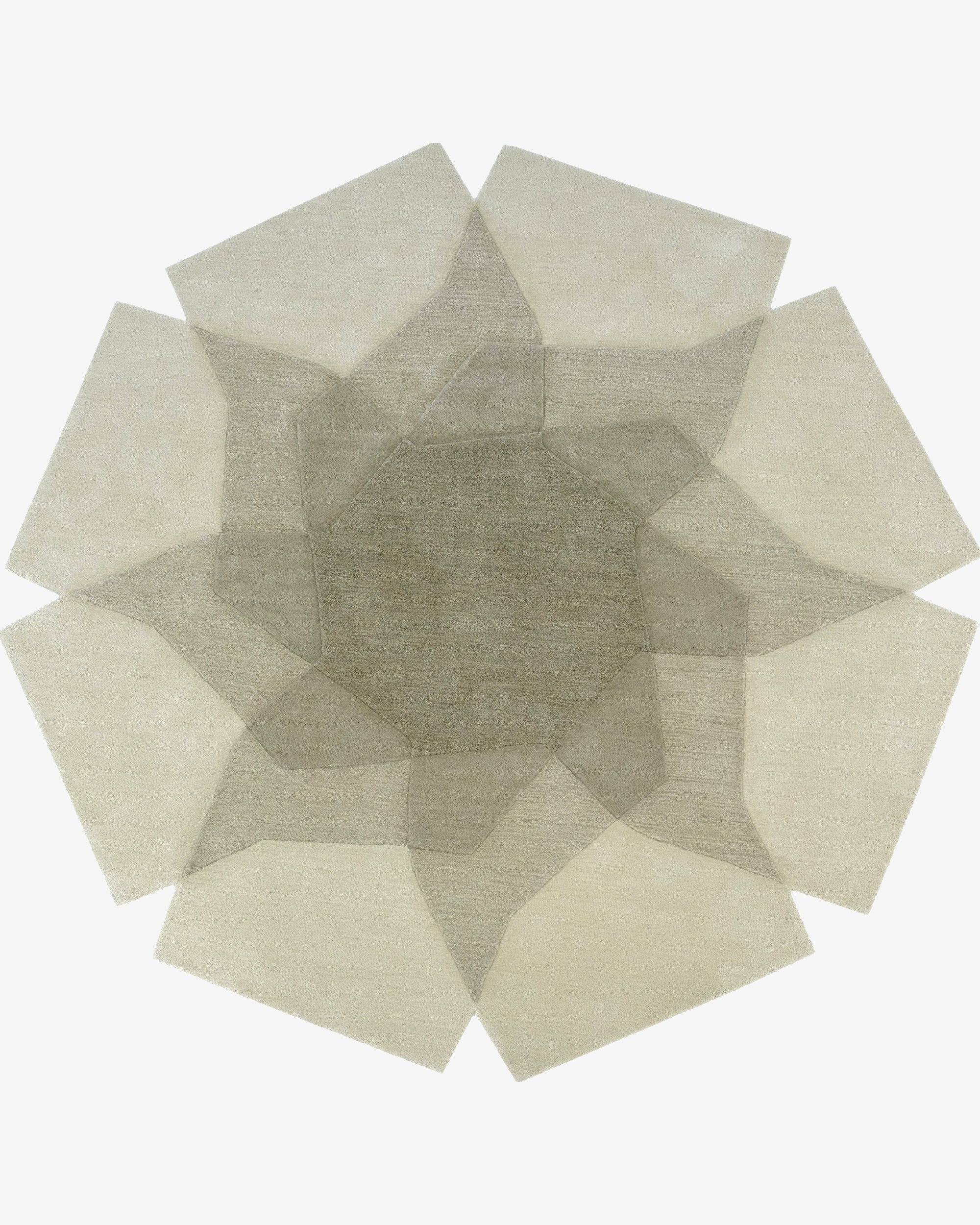
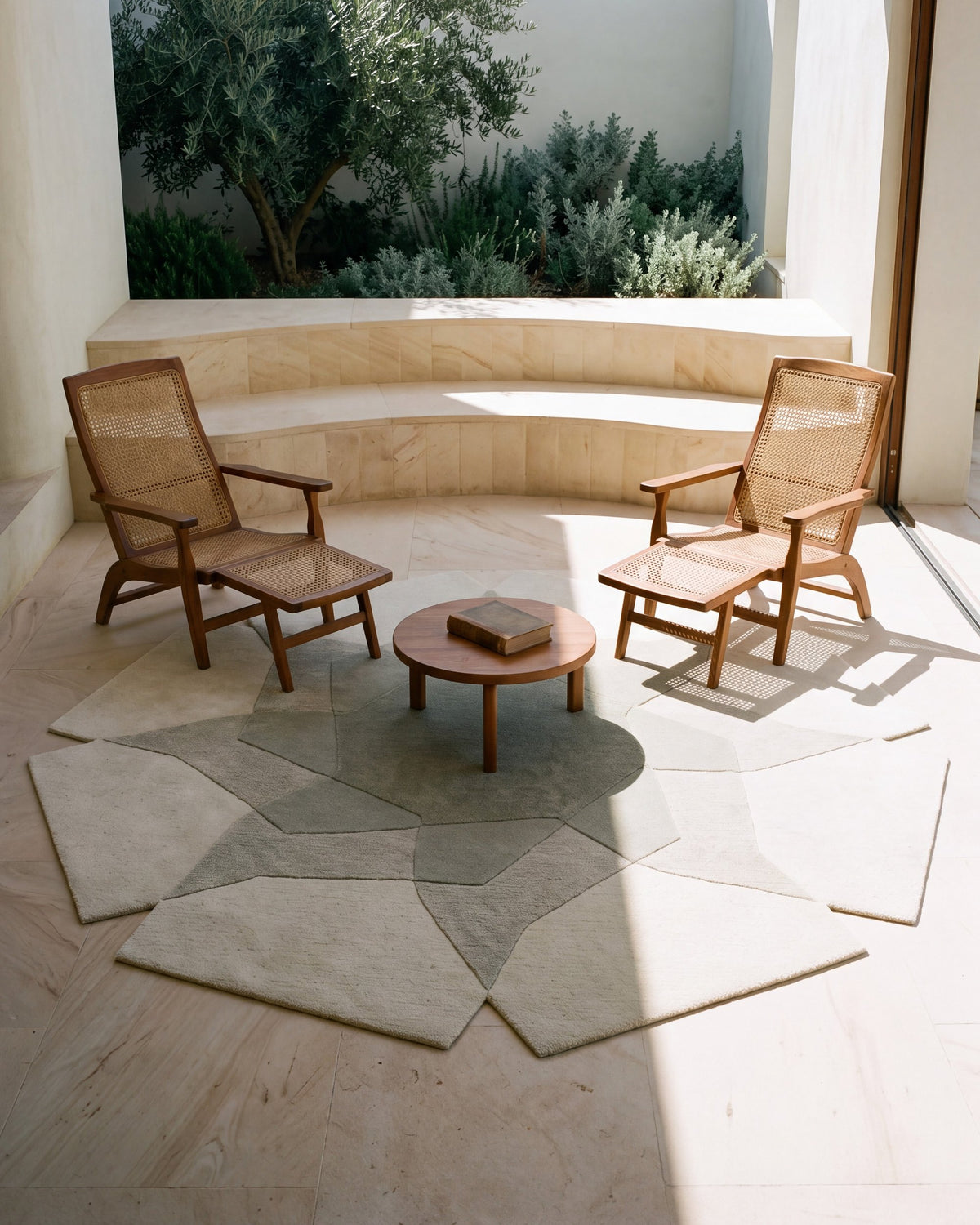
- Facet Wool Rug: faceted planes in an open, irregular outline, made entirely to your measure, from ₹22,700.
All prices are ex GST, which is added at checkout. Each Lamina rug is listed in six standard sizes from 5x8 to 12x15 ft, except Facet, and every one can be made in any size or colour. For the story behind the collection, read Lamina: carved wool rugs in many depths.
Carving draws with shadow, so the same rug looks different at nine in the morning and at seven at night.
Where does a carved rug look best in an Indian home?
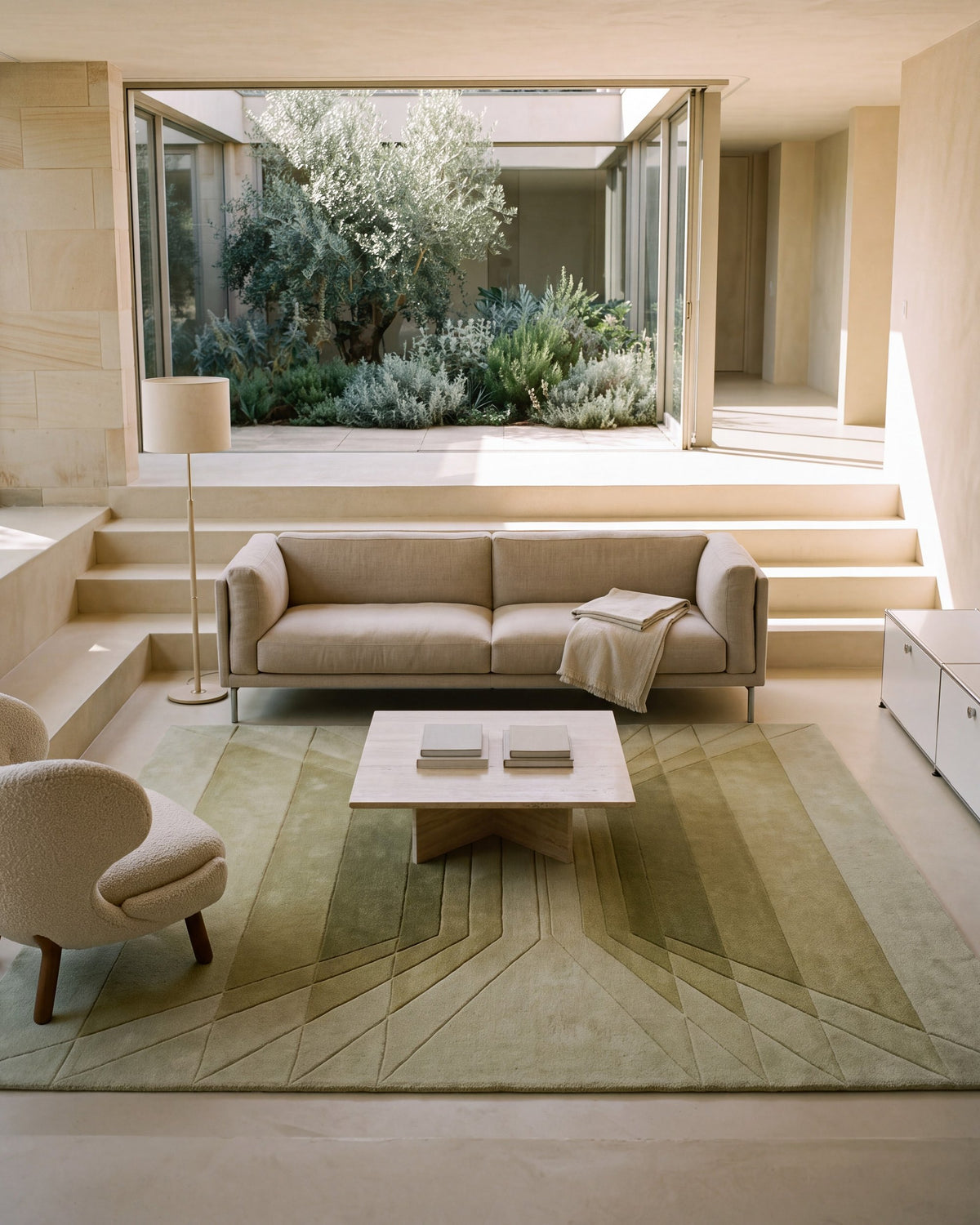
A carved rug looks best where light falls across the floor at a low angle: beside a large window, under a lamp at floor level or in a room that faces east or west. Overhead light flattens the grooves; side light opens them.

Many Indian apartments get strong morning or evening sun through a balcony door. Place the carved rug so that the long lines run across that light rather than along it, and the shadows lengthen. In a north facing room with even light, choose a design with deeper tone steps, such as Talus or Cadence, so the colour helps the carving.
- Living room: an 8x10 or 9x12 ft carved rug under the coffee table, front legs of the sofa on the rug, lines running toward the window.
- Bedroom: a 6x9 or 8x10 ft carved rug at the foot and sides of the bed, where bare feet meet the grooves first thing in the morning.
- Study or reading corner: a 5x8 ft piece under a reading chair and floor lamp, the lamp lighting the lines at night.
On white marble or vitrified tile, a carved rug in sage or sand adds depth without adding pattern. On dark wood, a paler Lamina tone shows the carving most clearly. Our guide to rug colour in natural light explains why the same rug changes through the day.
Does a carved rug wear well, and how do you care for it?
A carved rug in New Zealand wool wears well in living rooms and bedrooms, because the carving sits within a dense 14 to 16 mm pile that springs back. The grooves themselves need a little more attention than a flat surface, mainly to keep dust from settling in them.
Dust is the main issue in Indian cities. Fine dust drifts into a groove the way sand settles in the joints of a stone floor, and over months it can soften the shadow line. A weekly pass with a vacuum along the line of the carving, not across it, lifts it out.
- Weekly: vacuum with suction and a soft brush, moving along the carved lines.
- Monthly: brush the grooves gently with a soft clothes brush to stand the walls of the channel back up.
- Spills: blot with a white cloth from the outside in; never rub across a groove, which can flatten its edge.
- Every six months: turn the rug end to end so foot traffic and sun spread evenly.
- Deep cleaning: professional cleaning only, and tell the cleaner the rug is carved so they brush the pile back into the grooves.
Furniture dents are the other thing to watch. A sofa foot resting on a carved line presses the walls together; moving the sofa a few centimetres every few months, then brushing the spot, keeps the line crisp. Read how to keep dust out of a rug in India for more on daily dust.
Can you order a carved design of your own?
You can order a carved design of your own through Rugberry's made to measure service, in any size, shape or colour, built on a Rugberry design or on a drawing you bring. Carving suits made to measure work because the lines can follow a room: the edge of a step, the line of a window or the curve of a table.
Three decisions shape a custom carved rug. The first is how many tone steps you want, since each step needs its own carved edge. The second is the depth and angle of the groove, crisp or soft. The third is the pile height, which sets how deep the shadow can be.
Ask for a swatch of the colour and the carving before you commit, because a groove is easier to judge in your own light than on a screen. Our guides to ordering a swatch and custom rugs at Rugberry walk through the process. The guide to the ten rug textures shows where carving sits among the other nine.
Frequently asked questions
What is a carved rug?
A carved rug is a cut pile rug with grooves cut into the finished pile by hand, so the design is drawn by shadow. At Rugberry, carving is one of five cut pile textures and is the basis of the Lamina collection.
Is carving the same as a high low pile?
No. Carving cuts a groove into one pile height, while High-Low builds different pile heights into the same rug. The two are often combined, but a purely carved rug stays level underfoot.
Which Rugberry rugs are carved?
Every rug in the Lamina collection is carved: Cavea, Cadence, Facet, Lucid and Talus. Facet is the round one, and the other four come in six rectangular sizes from 5x8 ft to 12x15 ft.
How much does a carved rug cost at Rugberry?
At the time of writing, a carved Lamina rug costs ₹64,000 for 8x10 ft and ₹86,400 for 9x12 ft, ex GST, with 5x8 ft the lowest price. A round Facet costs ₹40,300 at 8 ft across. GST is added at checkout.
Do carved rugs collect dust?
Fine dust can settle in the grooves of a carved rug, which softens the line over time. Vacuuming along the carving once a week and brushing the grooves monthly keeps the shadow line crisp.
Let the light do the drawing. Material first.


Leave a comment
This site is protected by hCaptcha and the hCaptcha Privacy Policy and Terms of Service apply.