



A Rug Under a Glass Coffee Table
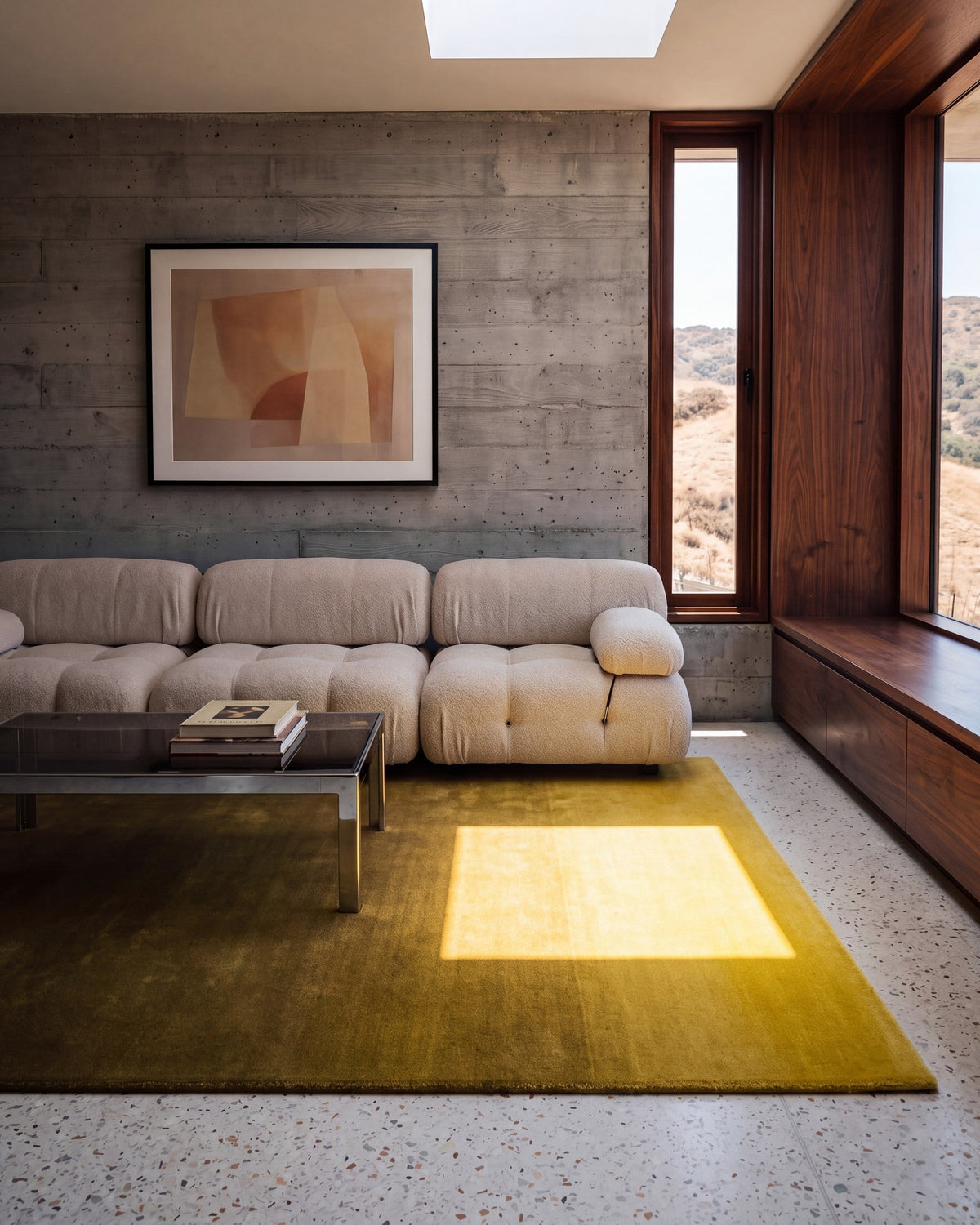
Under a glass coffee table, the rug becomes the view through the tabletop, so choose a surface worth looking at: a carved texture, a soft gradation or a pattern large enough to read through glass. Busy small patterns and sharp edges right under the glass usually look restless.
In short
- A glass coffee table shows the rug through its top, so the rug's centre becomes the most looked at part of the living room floor.
- Large scale patterns, gentle gradations and carved textures look calm through glass, while small busy repeats tend to look cluttered when framed by the table.
- The rug should extend at least 18 inches beyond the glass table on every side, so no rug edge runs visibly under the glass.
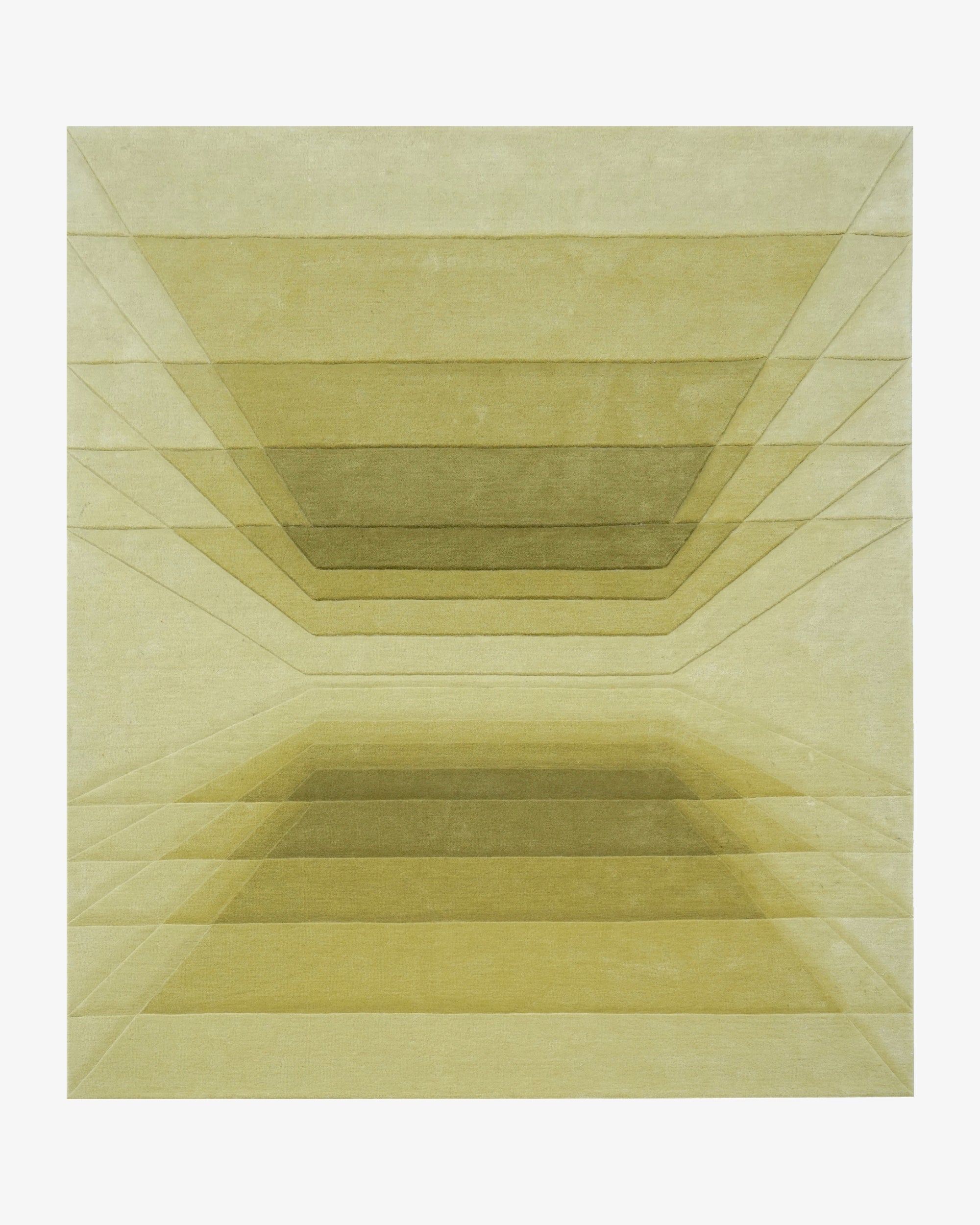
- Rugberry's Ombré Solitude Rug, a slow gradation in hand tufted New Zealand wool, has a regular price of ₹87,000 for 8x10 ft ex GST at the time of writing.
How does a glass coffee table change the rug choice?
A glass coffee table changes the rug choice because the rug under it is no longer hidden. Instead of a solid tabletop covering the rug's centre, you see straight through to the pile, framed like a picture.
With a wooden or stone coffee table, the middle of the rug is mostly in shadow. People choose rugs for their borders and corners, because that is what shows. A glass table reverses this: the centre becomes the focal point, magnified slightly by the glass and lit by the light falling through it.
Glass and metal tables are popular in Indian apartments for good reason. They make a compact living room feel larger, they do not block the view across the room, and they suit modern furniture. But they also expose whatever lies beneath, from a worn patch of pile to a rug edge that does not quite line up.
So the question shifts from which rug suits the sofa to which rug looks good seen through glass at close range. The answers below follow from that change.
Which patterns look good through glass?
Large scale, open patterns look good through glass because the table frames a meaningful piece of them. Small, dense repeats look busy, since the glass edge cuts them into an arbitrary rectangle.

Think of the table as a window. If the rug's pattern repeats every 6 inches, the window shows a dozen fragments with no beginning or end. If the motif spans 2 or 3 ft, the window frames one shape or one sweep of line, which feels composed.
| Rug surface | Through a glass table | Verdict |
|---|---|---|
| Large abstract shapes, such as Velocity | One or two shapes framed by the glass | Very good, reads as a deliberate composition |
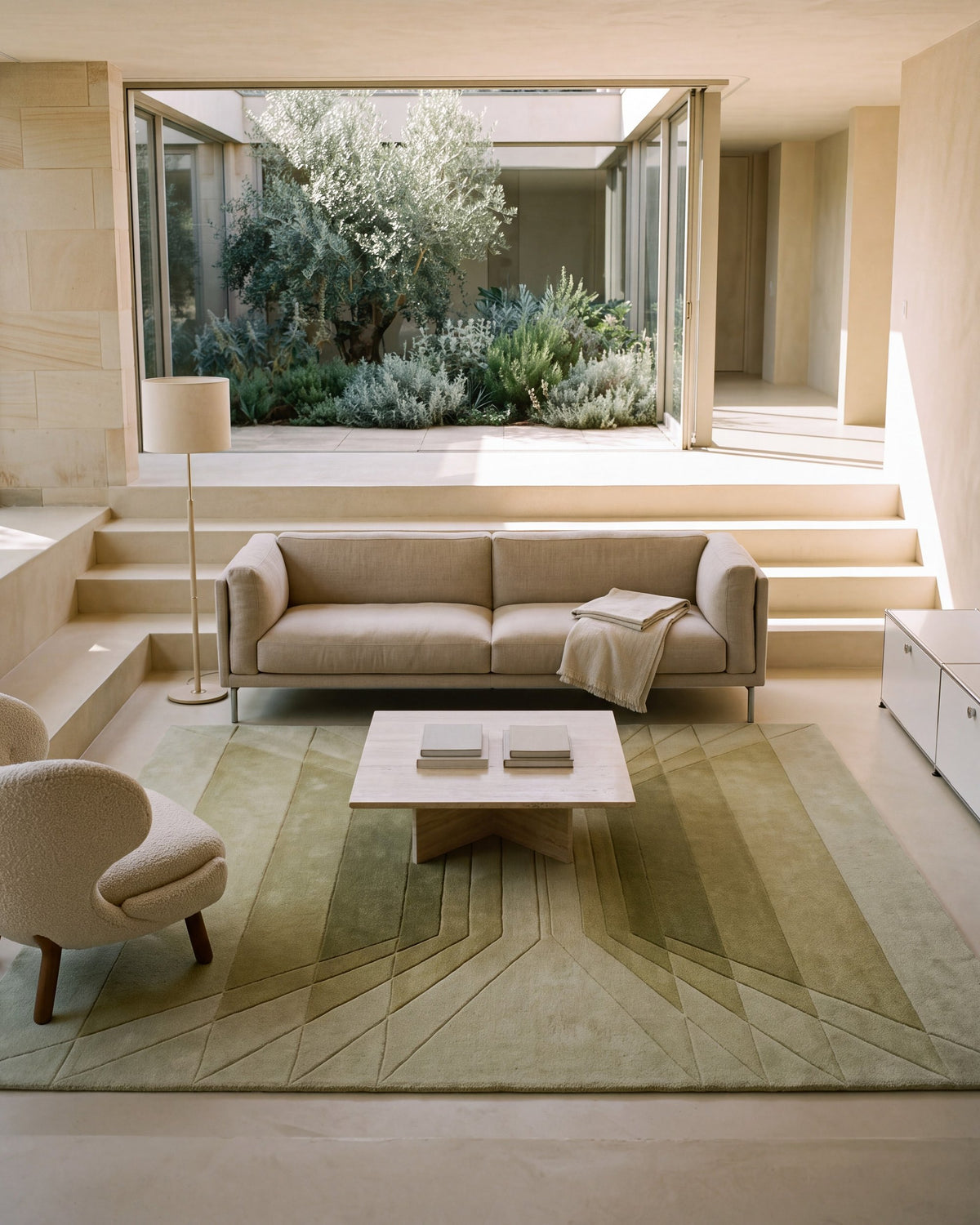
| Slow gradation, such as Ombré Solitude | A soft shift of tone, no hard lines | Very good, calm and forgiving |
| Carved one colour texture, such as Cavea | Shadows that move with daylight | Very good, especially with side light |
| Plain low pile | Texture only, shows marks and crumbs | Good, but needs regular care |
| Small busy repeat | Fragments cut by the glass edge | Often restless |
| Strong border under the glass | A line running across the tabletop | Avoid |
The verdict for a glass table: choose scale over detail. One confident shape seen through the glass beats a hundred small ones.
Which Rugberry rugs look right under glass?
Three Rugberry rugs suit glass tables particularly well: Velocity for large shapes, Ombré Solitude for gradation and Cavea for carved texture. Each gives the glass something calm to frame.


The Velocity Wool & Silk Rug is hand tufted New Zealand wool with Botanical Silk, drawn in fast directional strokes. Its regular price is ₹56,000 for 6x9 ft and ₹82,000 for 8x10 ft, ex GST at the time of writing. Through glass, the Botanical Silk shapes catch light against the matte wool.
The Ombré Solitude Rug is a slow gradation across an otherwise empty field, hand tufted New Zealand wool at 14 to 16 mm. It is listed at ₹59,000 for 6x9 ft and ₹87,000 for 8x10 ft before GST, and the Ombré collection shows its sister colours.
The Cavea Wool Rug is one colour carved into planes, hand tufted wool at ₹54,000 for 6x9 ft and ₹80,000 for 8x10 ft ex GST. Seen through glass, its carved steps throw soft shadows that change through the day.
What size should the rug be around a glass table?
The rug should extend at least 18 inches beyond the glass table on every side, and ideally reach under the front legs of the sofa and chairs. No rug edge should run under the glass itself.

This matters more with glass than with a solid table. Under a wooden top, an edge running beneath the table is hidden. Under glass, it shows as a hard line cutting across the tabletop, and it looks like a mistake.
For a 4x2 ft glass coffee table in front of a three seater sofa, an 8x10 ft rug is usually right. For a larger 5x3 ft table with an L shaped sofa, consider 9x12 ft. Rugberry's guide to rug size for a sofa gives the full spacing.
A glass table is a window onto the rug. Give it a view worth framing.
Centre the table on the rug, or on the rug's pattern where there is a clear centre. With a gradation like Ombré Solitude, think about where the change of tone falls; placing the table at the transition can look especially considered.
What about a round glass table?
A round glass table works well on a rectangular rug, as long as the rug still extends at least 18 inches beyond the table's widest point. Under a round top, a round motif or a gradation that softens toward the centre echoes the shape without fighting it.
A round table on a round rug can look striking in a square room, but it needs space on all sides. Rugberry's note on patterned or plain rugs helps decide how much pattern the room can take.
How do reflections and light affect the rug under glass?
Glass reflects windows, lamps and ceilings, so part of the rug will always be seen through a reflection. Matte wool reads more clearly through glass than very shiny surfaces do.
A rug with some Botanical Silk works well when the Botanical Silk is part of the pattern, as in Velocity. Those sheen areas catch light while the wool field stays quiet, which reads clearly even under a reflective top. An all over high sheen can compete with the glass's own reflections and look blurred.
Light from the side is the most flattering. A window or floor lamp beside the sofa sends low light across the rug, and a carved or textured surface shows its depth through the glass. Overhead light flattens texture, which is worth knowing if your living room relies on a single ceiling fixture.
Tinted and smoked glass change the colour of what lies beneath. A grey tinted top makes a warm rug look cooler and darker, so check rug colours with the actual table in place, or at least with a swatch under it.
How do you keep a rug under a glass table clean?
A rug under a glass table needs more frequent spot cleaning than one under a solid table, because crumbs, dust and pet hair under the glass are always visible. A quick weekly vacuum under the table solves most of it.
Glass tables invite visible mess. Every biscuit crumb from evening chai, every thread from a cushion and every tuft of a cat's fur sits in full view. Lift the table or slide it aside once a week and vacuum the area beneath with the pile.
Patterned and mid toned rugs hide this better than plain light ones. A gradation like Ombré Solitude or a multi tone abstract like Velocity disguises small crumbs; a plain ivory pile shows everything.
Clean the glass and the rug on the same day. A spotless rug under a smeared glass top still looks untidy, and a streak free table above a dusty rug draws the eye straight down. Rugberry's guide to forgiving rug colours lists the tones that hide daily wear best.
What else should you consider with glass and metal furniture?
Consider the table's legs and base. Thin metal legs press into the pile and can leave sharp dents, and a heavy glass top concentrates its weight on those points.


Many modern glass tables rest on four slim steel legs or a sled base. On a 14 to 16 mm pile, slim legs sink and leave marks that take time to recover. Small felt or clear acrylic cups under each leg spread the weight and protect the rug.
Glass edges are another consideration in homes with small children. A rug softens a fall but the table edge remains hard, so many families choose rounded glass or move to a solid table for a few years. Rugberry's note on texture versus pattern may help when the furniture changes later.
Finally, think about the rest of the room. A glass table with a strongly patterned rug works best when the sofa and walls stay plain. The pattern rugs collection and the living room rugs collection show both routes.
Frequently asked questions
What kind of rug goes under a glass coffee table?
A rug with a large scale pattern, a soft gradation or a carved texture goes best under a glass coffee table. These surfaces look composed when framed by the glass, while small busy repeats tend to look restless.
Should the rug edge show under a glass table?
No, a rug edge should never run under a glass table, because it shows as a hard line across the tabletop. The rug should extend at least 18 inches beyond the table on every side.
Do plain rugs work under glass coffee tables?
Plain rugs work under glass if they have visible texture, but they also show crumbs, dust and pet hair clearly. Mid tones and textured surfaces are more forgiving than plain light colours.
Will a glass table dent my rug?
Slim metal legs on a heavy glass table can press dents into the pile over time. Felt or acrylic cups under each leg spread the weight and help the wool recover.
Does tinted glass change how the rug looks?
Yes, tinted or smoked glass changes the colour seen through it, usually making a rug look cooler and darker. Check the rug colour, or a swatch, under the actual table before deciding.
Give the glass something worth framing. The pattern rugs are a good place to look. Material first.




Leave a comment
This site is protected by hCaptcha and the hCaptcha Privacy Policy and Terms of Service apply.