

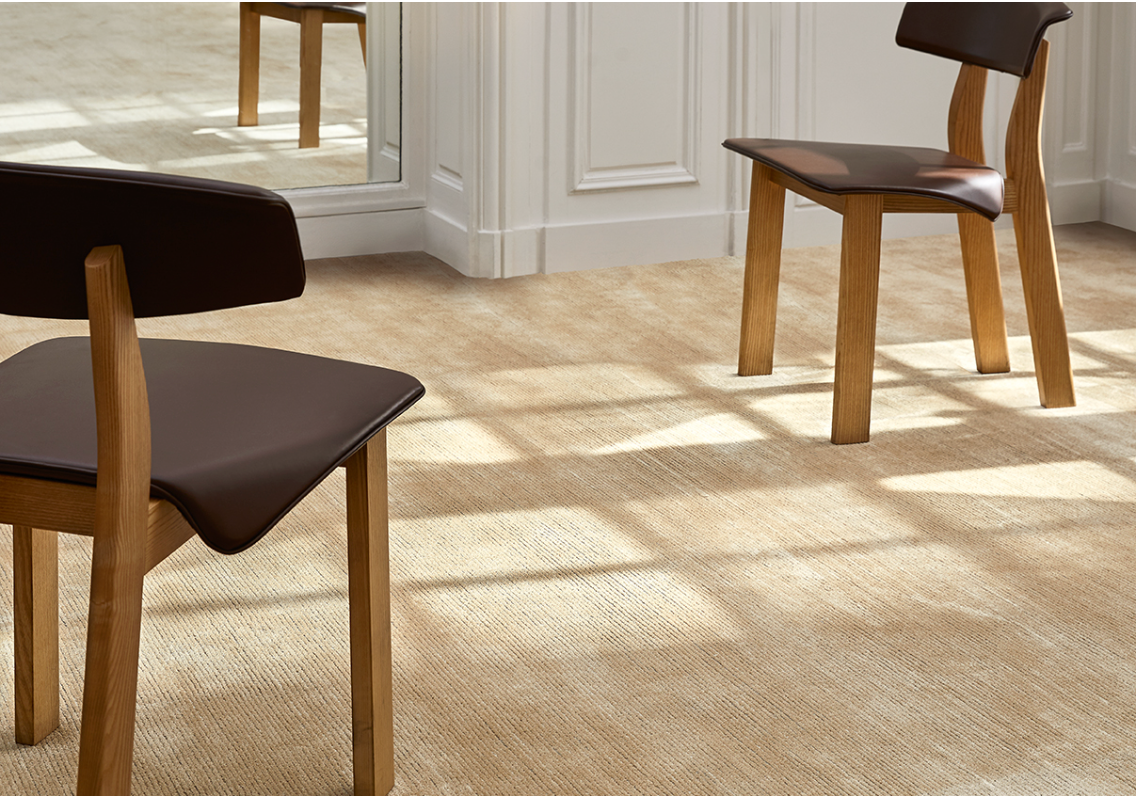

Liner, Plaid and Hem: Order in the Pile
Liner, Plaid and Hem are three hand tufted New Zealand wool rugs whose pattern is order itself: carved lines in ivory, a carved plaid in grey and a regular grid of ivory dots on camel. They suit rooms that want structure without loud colour, and each one changes a floor in a different way.
In short
- The Rugberry Liner Wool Rug is hand tufted ivory New Zealand wool with fine lines carved tone on tone in blocks that change direction, at a regular price of ₹37,000 for 5x8 ft ex GST at the time of writing.
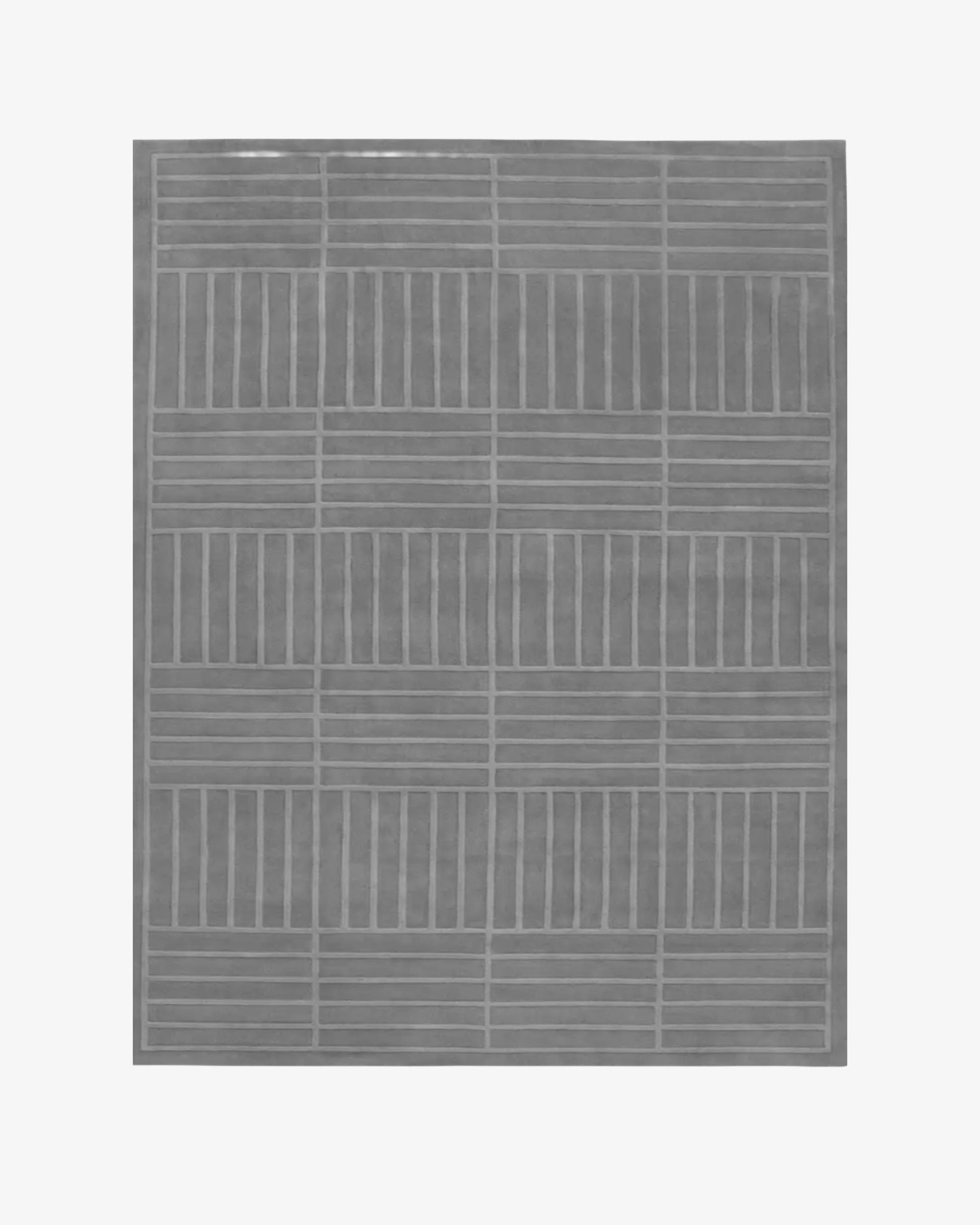
- The Rugberry Plaid Rug is grey hand tufted New Zealand wool with a plaid carved into the pile, so the pattern shows as shadow rather than colour.
- The Rugberry Hem Rug is a camel hand tufted wool field set with a regular grid of small ivory dots, the only one of the three where the pattern is in a second colour.
- Carved lines read strongest in low side light from a window, and the grooves need a vacuum run along their length, not across them.
What do Liner, Plaid and Hem have in common?
Liner, Plaid and Hem share a pattern built on repetition rather than on a drawing. Each is hand tufted in New Zealand wool at 14 to 16 mm, and each sets one simple unit, a line, a crossing or a dot, across the whole field.
That repetition is what makes them calm. The eye learns the rule in a second and then rests, which is why rugs like these sit well in rooms that already hold busy bookshelves, art or a strong sofa fabric.
The difference is in how loudly each states its rule. Liner and Plaid carve their pattern into a single colour, so it appears and disappears with the light, while Hem prints its grid in ivory on camel and holds it at every hour of the day.
All three are Terra grade rugs in the standard Rugberry sizes from 5x8 to 12x15 ft, and all can be made to any size. That matters in Indian flats, where a living room of 11x14 ft rarely suits a stock rectangle exactly.
How does the Liner Wool Rug use carved lines?
The Liner Wool Rug uses lines carved into an ivory pile, grouped in blocks that change direction across the rug. There is no second colour; the pattern is made by the cut.


In each block the lines run one way, then the next block turns them a quarter. From standing height this reads as a quiet patchwork of grain, a little like planks laid in alternating panels.
Because the lines are a cut and not a dye, the rug changes with the hour. Morning sun across a balcony door throws every groove into relief, and by evening under ceiling lights the rug reads close to plain cream.
At regular price the Liner Wool Rug costs ₹37,000 for 5x8 ft, ₹50,000 for 6x9 ft and ₹74,000 for 8x10 ft, ex GST at the time of writing. The larger sizes run to ₹1,66,000 for 12x15 ft.
Liner suits white marble and pale vitrified tile best, because the ivory sits a shade off the floor and the carving keeps it from looking like a sheet laid down. Our guide on carving as a rug texture explains how the cut is made.
What makes the Plaid Rug different from a printed check?
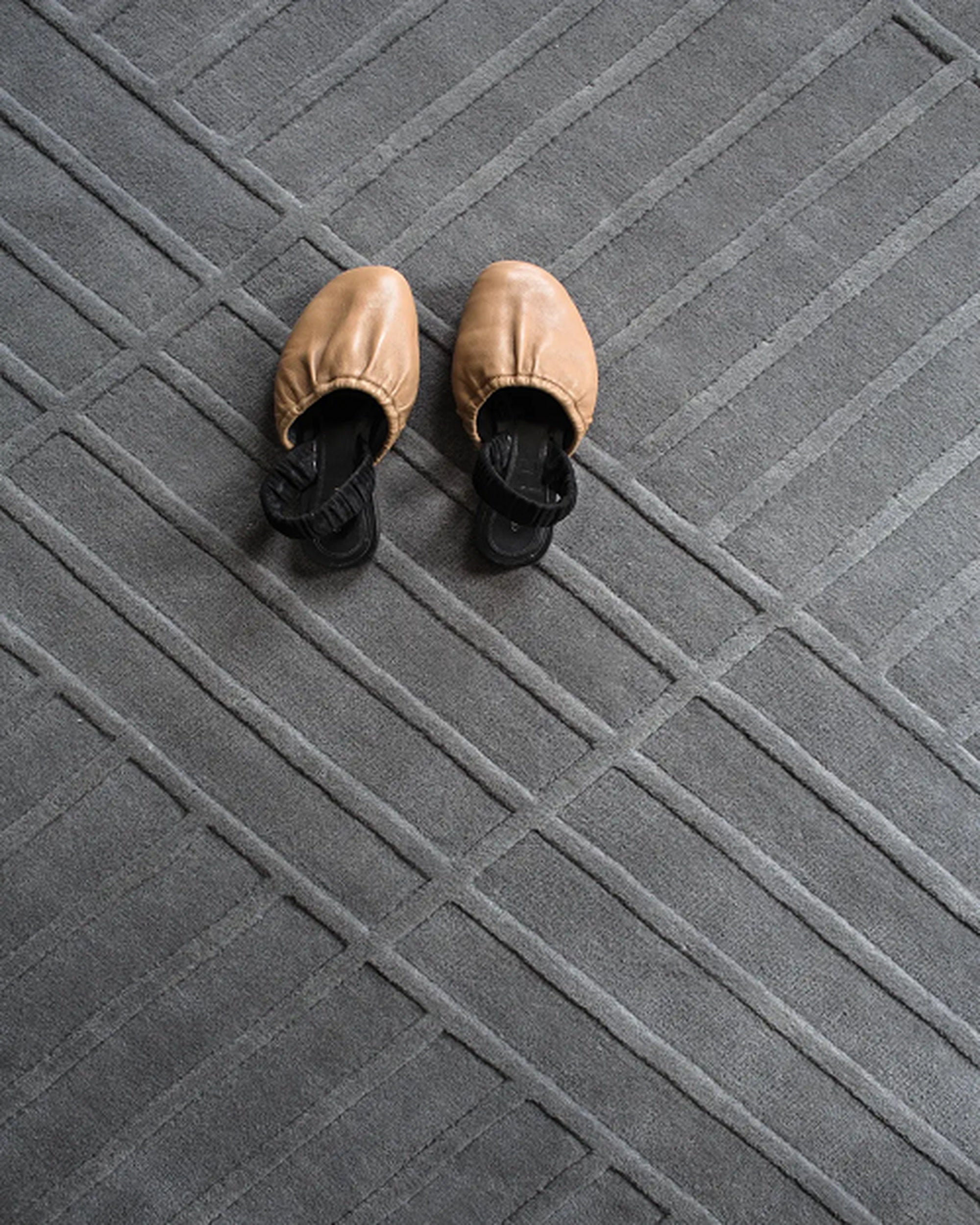
The Plaid Rug is different because its plaid is carved, not coloured. Bands of fine carved lines cross each other on a grey hand tufted field, so the check appears as shadow and depth in one tone.


A printed or woven check in two colours is busy at close range and strong from across a room. A carved plaid works the other way round: from the sofa it reads as a soft, even grey, and only when you look down does the structure appear.
That makes Plaid a sound choice for a grey room that risks feeling flat. A grey sofa on a grey rug can merge into one block, and the carved crossings give the floor a surface for light to catch without adding a new colour.
The regular price of the Plaid Rug matches Liner: ₹37,000 for 5x8 ft and ₹1,00,000 for 9x12 ft, ex GST at the time of writing. A 5x8 ft piece can be seen at the Noida Experiential Centre, described in our post on seeing rugs in person.
A carved pattern is a promise the light keeps: strong at dawn, almost gone by lamplight.
Why does Hem use a grid of dots instead of lines?
The Hem Rug uses a grid of dots because a dot repeats order without pointing anywhere. Small ivory dots sit at even spacing across a camel field, so the rug has no direction and looks the same from every side.


That lack of direction is useful in a square room or under a dining table, where people sit on all four sides. Lines would favour one view; the dot grid treats every chair equally.
Hem is also the warmest of the three. Camel brings colour to a room of white walls and pale floor, and the ivory dots keep that warmth light rather than heavy. Its regular price is ₹40,000 for 5x8 ft and ₹79,000 for 8x10 ft, ex GST at the time of writing.
The product copy for Hem speaks of a quiet edge framing the field, and that is how the grid feels: the dots stop short of the binding and leave a calm margin of plain camel. On a teak or mid brown floor, that margin gives the rug a clean outline.
How do line direction and repetition change a room?
Line direction changes how long or wide a room feels, and repetition decides how calm it reads. Lines laid along a room lead the eye down it, lines across it widen it, and a grid with no direction holds the room still.
| Rug | Unit of pattern | Direction | Colour | Effect in a room | Regular price, 8x10 ft |
|---|---|---|---|---|---|
| Liner Wool Rug | Carved lines in blocks | Changes block to block | Ivory, one tone | Texture that moves with daylight | ₹74,000 |
| Plaid Rug | Carved crossing bands | Two ways at once | Grey, one tone | Structure under a plain grey room | ₹74,000 |
| Hem Rug | Small ivory dots | None | Camel and ivory | Warm, even, the same from every side | ₹79,000 |
| Oblique Wool Rug | Ruled black lines | One strong direction | Black on ivory | Graphic, leads the eye hard | ₹74,000 |
Prices are regular prices ex GST at the time of writing. For a narrow living room that should feel calm rather than graphic, choose Liner over a ruled black line, because carved lines lengthen the floor without drawing a hard stripe across it.
The Oblique Wool Rug is the high contrast version of the same idea: black lines ruled across ivory, which our post on Oblique, Monochrome and Outline covers in detail. For proportions in a long room, see our guide to a long, narrow living room rug.
Repetition has a practical side too. A regular pattern hides a slightly crooked placement less well than a loose drawing, so square Liner, Plaid or Hem to the main wall and check it from the doorway before the furniture goes back.
Which room suits each of the three?
Liner suits a pale living room or bedroom, Plaid suits a grey or cool room that needs depth, and Hem suits a dining area or a warm room of wood and cane. The choice follows the colour already on the floor and walls.

In a bedroom, Liner under a king bed in 8x10 ft lets the carved blocks show on both sides of the bed, where morning light from the window falls low across them. The cream tone stays restful at night.
In a study or a home office, Plaid in 5x8 ft under the desk and chair adds order without distraction on a video call, and grey forgives the dust that settles near a window in Delhi or Jaipur winters. Our post on grey rugs that do not feel cold covers pairing it with warm wood.
Under a six seater dining table, Hem in 8x10 ft gives every chair the same view of the grid. Camel also hides the small marks of daily meals better than ivory, which is worth weighing in a home that eats at the table three times a day.
How do you clean a rug with carved grooves?
Clean a carved rug by vacuuming along the grooves, not across them, with the beater bar off or set high. Crumbs and dust settle at the bottom of a carved line, and a pass along its length lifts them out.

On Liner, that means changing direction block by block, which takes a minute longer than a flat rug but keeps the cut crisp. On Plaid, run along one set of bands, then turn and run along the other.
A soft brush helps where grit has packed into a groove after a dusty week. Brush with the line, then vacuum. Our guide to carved high low pile sets out why grooves need this care.
Hem has no carving, so it cleans like any even hand tufted pile. Blot spills at once with a dry white cloth, working from the outside in so a mark on the camel does not spread into the ivory dots. Rugberry recommends regular vacuuming and professional cleaning only for every rug in this group.
Frequently asked questions
Do carved lines flatten over time?
Carved lines soften a little at the edges in the busiest walking path, which is normal for a cut wool pile. Turning the rug end to end once or twice a year spreads the wear so one side does not lose its definition first.
Can I order Liner or Plaid in a different colour?
Yes. Rugberry lists custom colours on request for both, so the same carved pattern can be made in a tone that suits your floor. Order a swatch first, because carving reads differently in a darker colour.
Is a dot grid rug good for children's rooms?
A dot grid suits a child's room because it has no direction, so the rug looks right however the bed or play table moves. Hem's camel field also hides small marks better than a pale rug, though spills still need blotting at once.
Will a robot vacuum clean carved grooves?
A robot vacuum lifts surface dust from carved rugs, but it crosses the grooves at random and leaves some grit in them. Follow it with a manual pass along the lines once a week to keep the cut clean.
Which is the most affordable of the three?
Liner and Plaid share the same regular price, from ₹37,000 for 5x8 ft ex GST at the time of writing, while Hem starts at ₹40,000. GST at 5 percent is added at checkout and delivery is free.
Order in the pile, quiet on the floor. See pattern rugs and the straight line loop texture. Material first.




Leave a comment
This site is protected by hCaptcha and the hCaptcha Privacy Policy and Terms of Service apply.