



Do Handmade Rugs Last Longer Than Machine Made?
Yes, a well made handmade rug in a natural fibre usually outlasts a machine made rug, because its fibre is more resilient and its structure can be repaired. How much longer depends on construction: hand knotted lasts longest, then handloom and hand woven, then hand tufted, and care decides as much as method.
Short answer
- Handmade rugs in natural fibres generally last longer than machine made synthetic rugs, because wool and jute wear slowly and handmade structures can be repaired.
- Among handmade rugs, hand knotted rugs last longest, because every tuft is tied around the warp and can be reknotted, which is why they are often passed down.
- A hand tufted rug lasts many years with care, but its pile is held by latex and a backing cloth, which limits repair once the backing ages.
- Vacuuming, rotation, keeping the rug dry and out of hard sun, and professional cleaning extend the life of any rug more than any single choice of construction.
Why do handmade rugs tend to last longer?
Handmade rugs tend to last longer for two reasons: they are usually made in natural fibres that wear slowly, and their structures can be repaired rather than replaced. A machine made rug is usually built for a price and a span of years, not for repair.
Wool fibre bends and springs back thousands of times before it breaks, and its natural crimp lifts the pile after pressure. Jute is strong and fibrous when kept dry. Many machine made rugs use synthetic piles that are cheap and stain resistant, but flatten in traffic paths and cannot be brought back.
The second reason is structure.
In a hand knotted rug every tuft is tied around the warp threads, so a worn patch can be reknotted. In a handloom rug the pile is woven into the warp and weft, so the edges can be rebound. That repairability is what turns a rug into something kept for decades.
Which handmade construction lasts the longest?
Hand knotted rugs last the longest of the four handmade constructions, followed by handloom and hand woven, with hand tufted shortest of the four. The table compares them for a wool rug in a living room.


| Construction | How it holds together | Relative lifespan | What can be repaired | Rugberry example |
|---|---|---|---|---|
| Hand knotted | Knots tied around warp threads | Longest, often passed down | Reknotting, rebinding, refringing | Stratum, Pazo, Savannah |
| Handloom | Pile woven into warp and weft on a loom | Long | Edges rebound, local reweaving | Grain, Plush, Cabra |
| Hand woven flat | Woven flat, no separate pile | Long, hard wearing surface | Edges rebound, reversible use | Kora, Cobble, reversibles |
| Hand tufted | Tufts fixed with latex and backing cloth | Many years with care | Edges rebound, backing limits more | Fluid, Cavea, Arctic |
| Machine made | Machine woven or tufted, often synthetic | Usually shortest | Rarely worth repairing | Rugberry does not make these |
Lifespan in years depends heavily on traffic and care, so the table ranks rather than promises. The verdict: for a rug meant to outlast the furniture choose hand knotted; for a long, comfortable everyday life at a lower price choose handloom.
Rugberry's guide to the most durable rug construction covers each method in detail.
Does the fibre matter as much as the construction?
Yes. Fibre matters as much as construction, because a strong construction in a fragile fibre still wears fast, and a modest construction in a resilient fibre can last well.


- New Zealand wool is the most forgiving everyday fibre: resilient, slow to soil and easy to clean professionally.
- Jute is strong and firm when dry, but water weakens it, so its life depends on keeping it dry.
- Botanical Silk, a plant-derived fibre with a silk-like sheen, is softer than wool and shows crushing and pressure marks sooner, so it lasts best in calm rooms.
- Wool blends with cashmere or Botanical Silk sit between, with the wool carrying most of the wear.
A rug lasts as long as its weakest choice: fibre, construction or care. Get all three right.
For fibre choices in detail, see Rugberry's guide on how long a rug lasts, and the companion post is Botanical Silk durable.
What makes a machine made rug wear out sooner?
A machine made rug usually wears out sooner because synthetic piles crush and do not recover, short piles show traffic lanes quickly, and the structure is not built to be repaired. That said, some machine made rugs have real strengths.
Polypropylene and similar fibres resist many stains and can be cleaned with water, which suits a busy kitchen or a rental. The weakness is resilience: once a traffic path flattens and dulls, it stays that way, and heat can glaze the fibre.
Price per year is the fair comparison. A machine made rug replaced every few years can cost as much over a decade as one handmade wool rug kept for that decade, and looks tired for more of that time. Rugberry's guide to handmade vs machine made rugs goes further.
Can a handmade rug be repaired?
Yes. Most handmade rugs can be repaired by a skilled rug restorer: edges rebound, fringes replaced, moth or burn damage rewoven, and hand knotted rugs reknotted in worn patches. Repair is what makes a handmade rug a long term object.


The most common repairs in Indian homes are worn edges from vacuums and furniture, a small burn from a diya or incense, and moth damage in a rug that was stored badly. Each is far easier to fix early, before a small loss spreads.
Hand tufted rugs can have edges rebound and small patches re-tufted, but once the latex backing has aged and stiffened there is less a restorer can do. Keep the receipt and the product name, so a restorer can match the fibre and pile height.
How do you make a handmade rug last in an Indian home?
You make a handmade rug last by vacuuming it regularly, rotating it twice a year, keeping it out of hard sun and off wet floors, using a rug pad, and sending it to a professional cleaner every year or two. None of these takes long.
- Vacuum weekly, twice a week in dusty winters, without a beater bar on a high setting.
- Rotate every six months so traffic and sunlight spread evenly.
- Draw sheers at peak sun. Strong afternoon sun fades any dyed fibre over years. Rugberry's guide to rug fading in sunlight has more.
- Keep it dry. Let mopped floors dry before the rug goes back, and air the room in monsoon.
- Use a pad, which reduces wear and slipping on marble and vitrified tile.
- Clean professionally, never by soaking at home.
Rugberry's care note for most of its rugs is the same short line: vacuum regularly, professional cleaning only. Jute and jute blends add one more: blot spills at once and keep dry.
Which Rugberry rugs are built for the longest life?
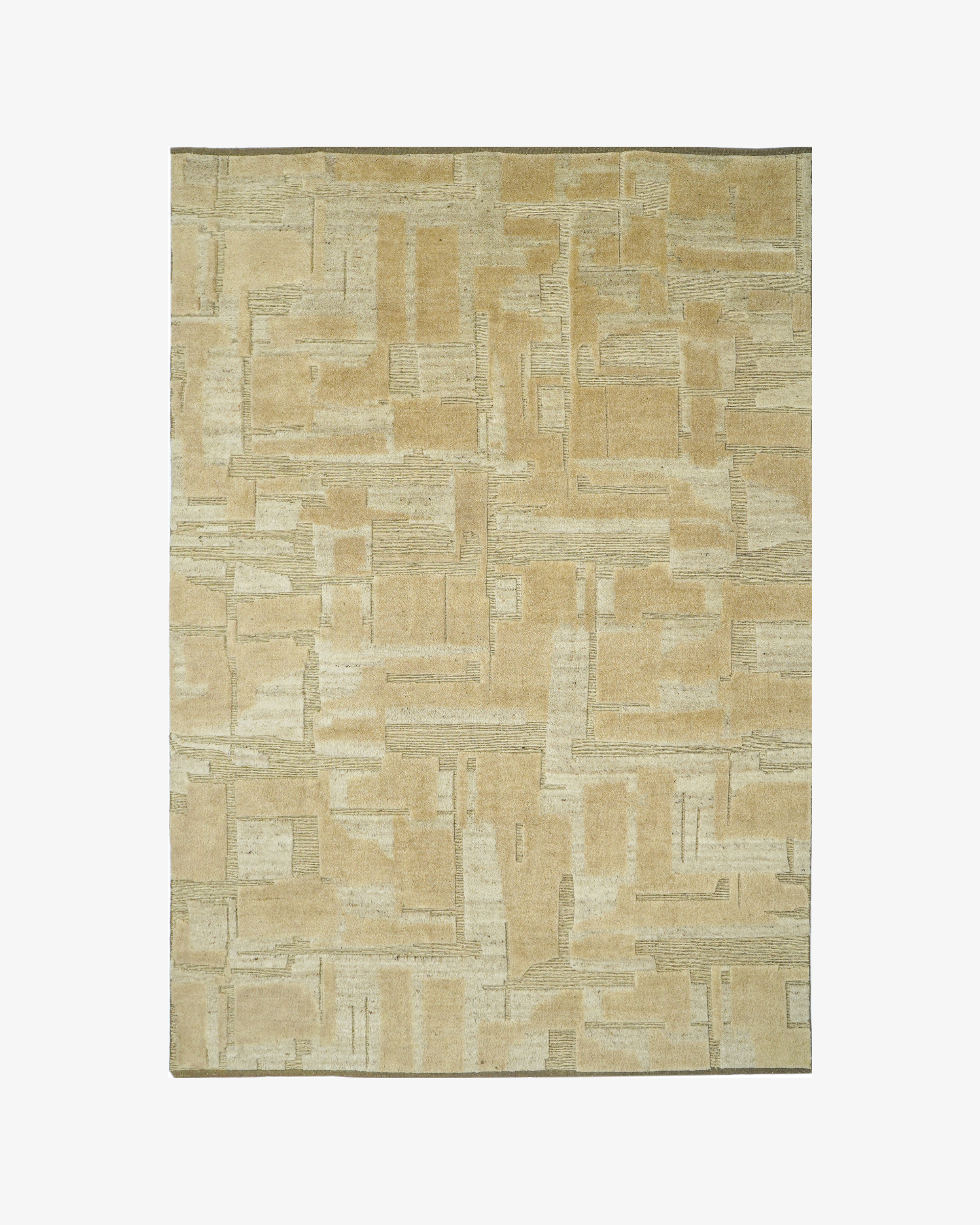
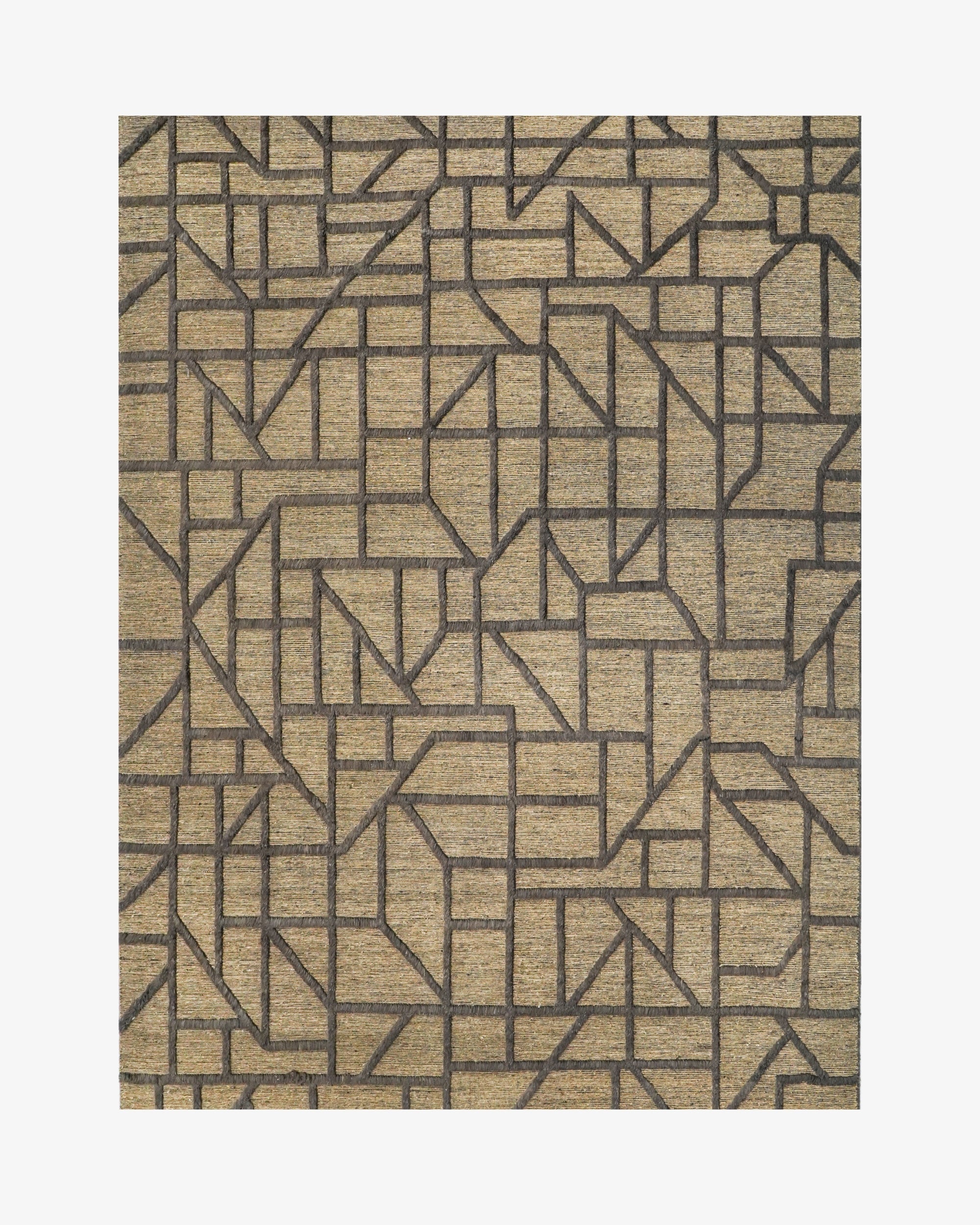
The Rugberry rugs built for the longest life are the hand knotted Stratum and Pazo in New Zealand wool and the hand knotted Savannah in jute, with the handloom Grain as the long lived everyday choice. Prices are regular, ex GST, at the time of writing; a seasonal sale may show lower figures.


The Stratum Knotted Rug in Dune is ₹1,75,000 for 9x12 ft, and the Pazo Knotted Rug, hand knotted New Zealand wool with raised lines, is ₹1,65,000 for 9x12 ft. The Savannah Jute Rug in Cashew is hand knotted jute at 15 to 16 mm, ₹41,000 for 5x8 ft, for dry rooms.
The Grain Wool Rug in Russet, handloom New Zealand wool at 12 to 14 mm, is ₹37,000 for 5x8 ft and ₹74,000 for 8x10 ft. Its low, closely worked surface does not crush, and its deep clay colour hides wear. All of Rugberry's hand knotted rugs are in one collection.
How can you tell if a rug is really handmade?
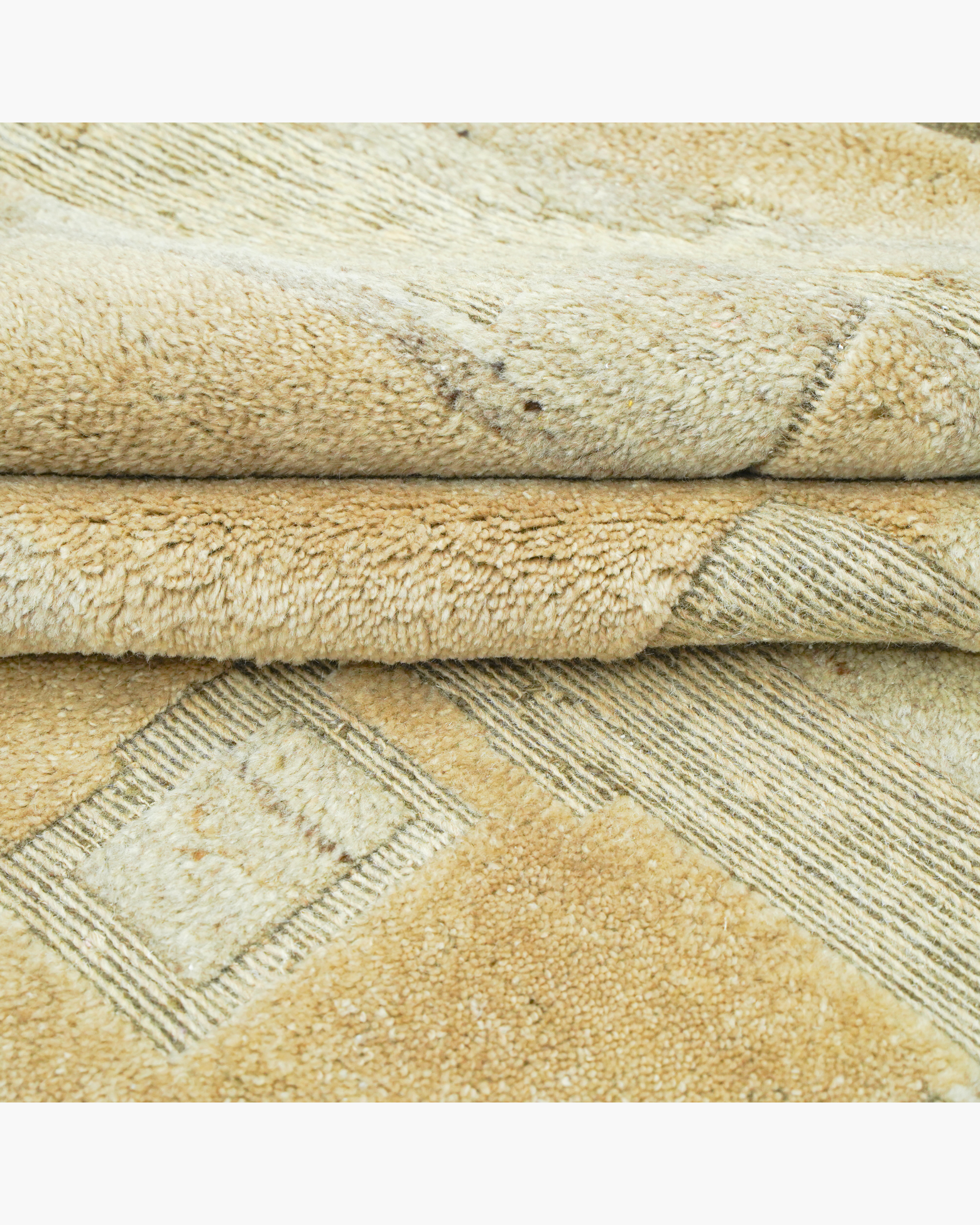
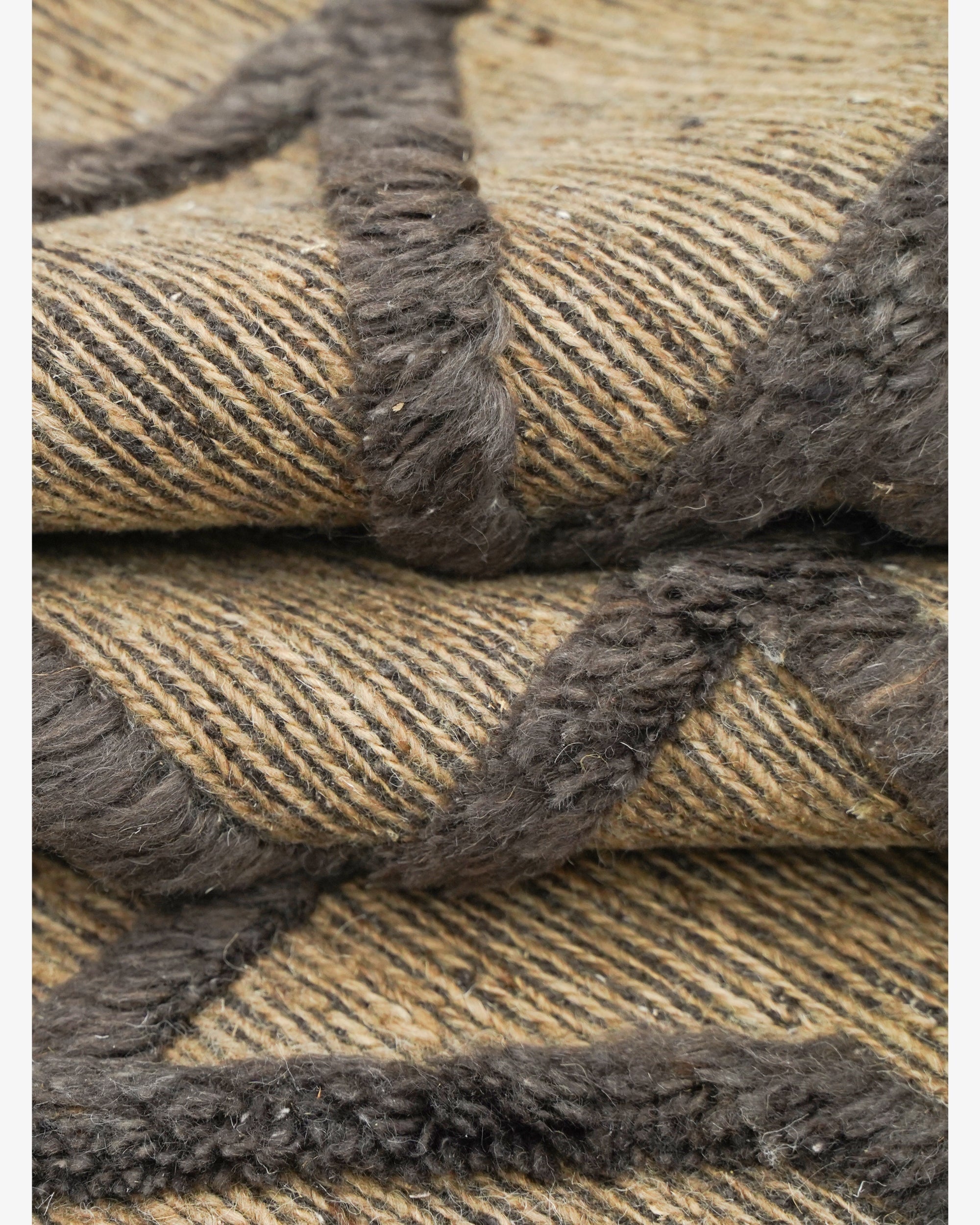
Turn the rug over. The back of a rug shows how it was made more clearly than the front, and a few signs tell handmade and machine made apart.
- Hand knotted. The back shows the pattern in small individual knots, slightly irregular, and the fringe is the end of the warp threads rather than a sewn on strip.
- Handloom and hand woven. The back shows the weave, with small variations in tension, and the edges are finished by hand.
- Hand tufted. The back is covered by a cloth, often with a bound edge; the face shows the tufted pile and any carving.
- Machine made. The back is very regular, the edges are perfectly straight and machine sewn, and any fringe is usually stitched on.
Small irregularities in colour, line or edge are normal in a handmade rug and are not faults. Rugberry's guide to handmade rug irregularities and the guide to the back of a rug show what to look for.
Ask the seller for the construction in writing as well. A rug described only as handcrafted or artisanal may be any of these, and the construction is what decides how long it lasts and whether it can be repaired.
Frequently asked questions
How long does a hand knotted rug last?
A well made hand knotted wool rug, cared for properly, can last for decades and is often passed between generations. Its knots can be repaired, so wear in one area does not end the rug's life.
Do hand tufted rugs last as long as hand knotted rugs?
No. A hand tufted rug lasts many years with care, but its pile is fixed with latex and a backing cloth that ages, and it cannot be reknotted. Hand knotted rugs last longer and cost more for that reason.
Are machine made rugs ever the better choice?
Yes, for very short use, outdoor spaces or places with constant spills, where a washable synthetic rug is practical. For a living room or bedroom kept for years, a handmade natural fibre rug usually gives better value per year.
Does jute last as long as wool?
Jute is strong when dry and a hand knotted jute rug wears well, but water weakens jute and it is coarser underfoot. In dry rooms it lasts well; in damp rooms wool lasts longer.
What shortens the life of a rug most in India?
Damp floors in monsoon, hard afternoon sun, grit from unswept dust and washing a rug at home are the most common causes. Each is avoided with simple habits: keep the rug dry, draw sheers, vacuum regularly and clean professionally.
A rug's life is decided at three moments: when it is made, when it is chosen and every week it is cared for. Choose a construction you can repair, and it will keep its place for years.




Leave a comment
This site is protected by hCaptcha and the hCaptcha Privacy Policy and Terms of Service apply.