






Rugberry Journal
Handloom, Hand Knotted, Hand Tufted, Hand Woven
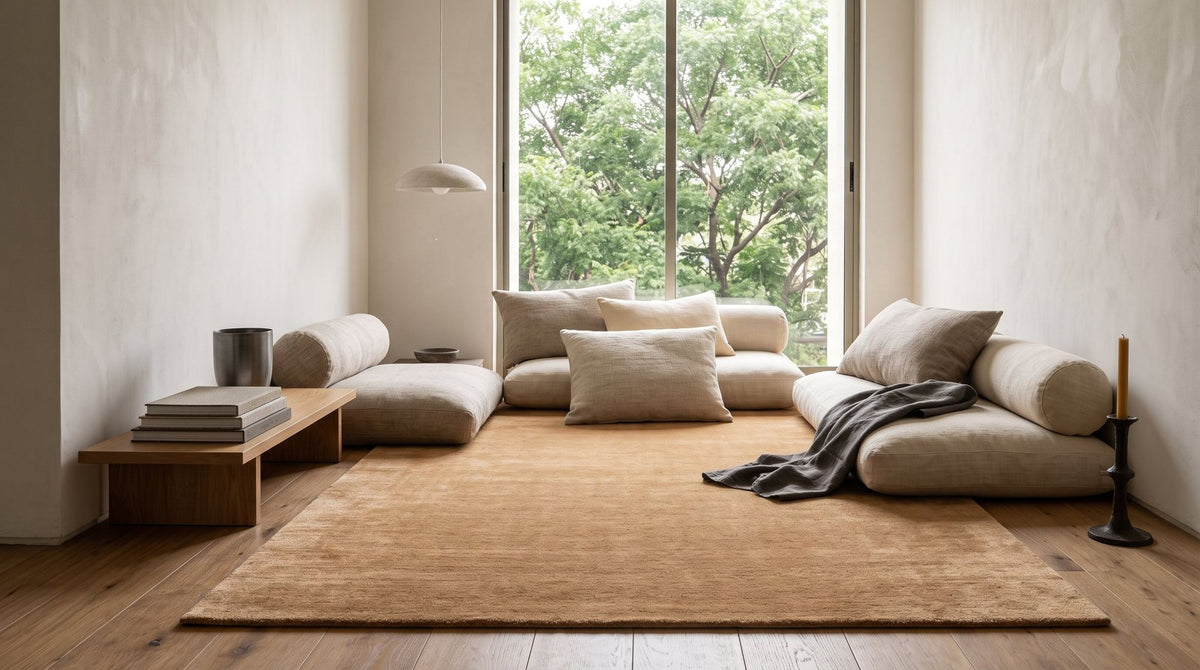
One reference for the four ways Rugberry makes a rug, with thickness, feel, lifespan, price and the best room for each construction.
Read more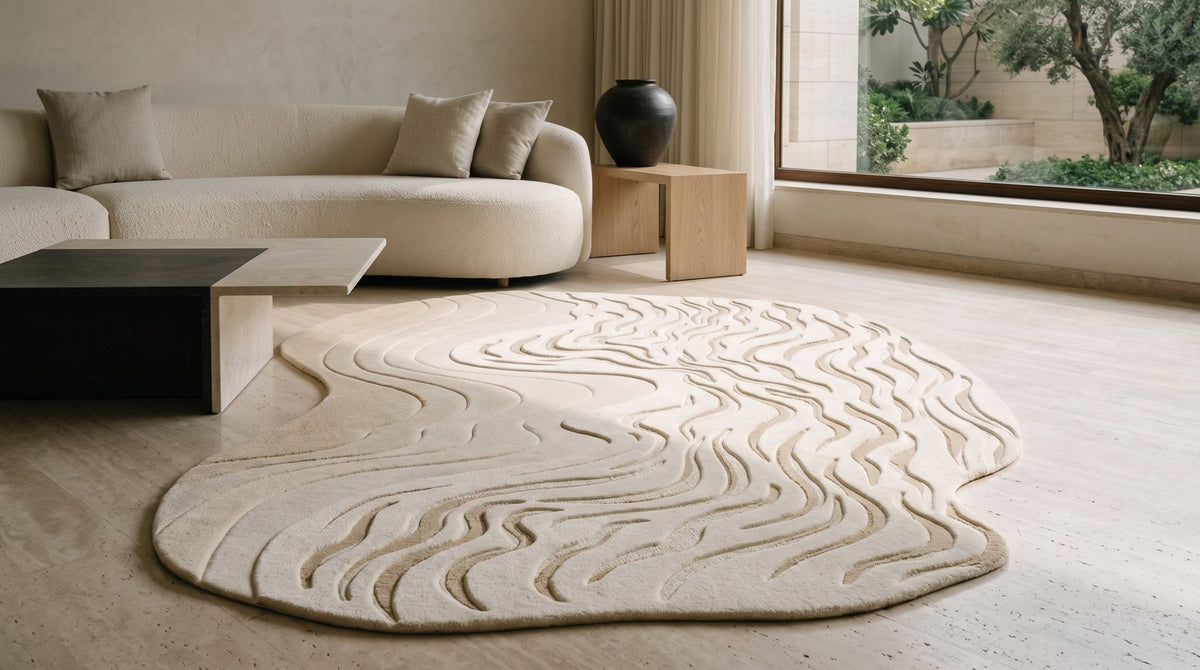
Carved Rugs: High Low Pile Explained
A carved, high low pile rug draws its design in depth as well as colour. On a pale marble floor in raking light, those shadows do most of the work.
Read more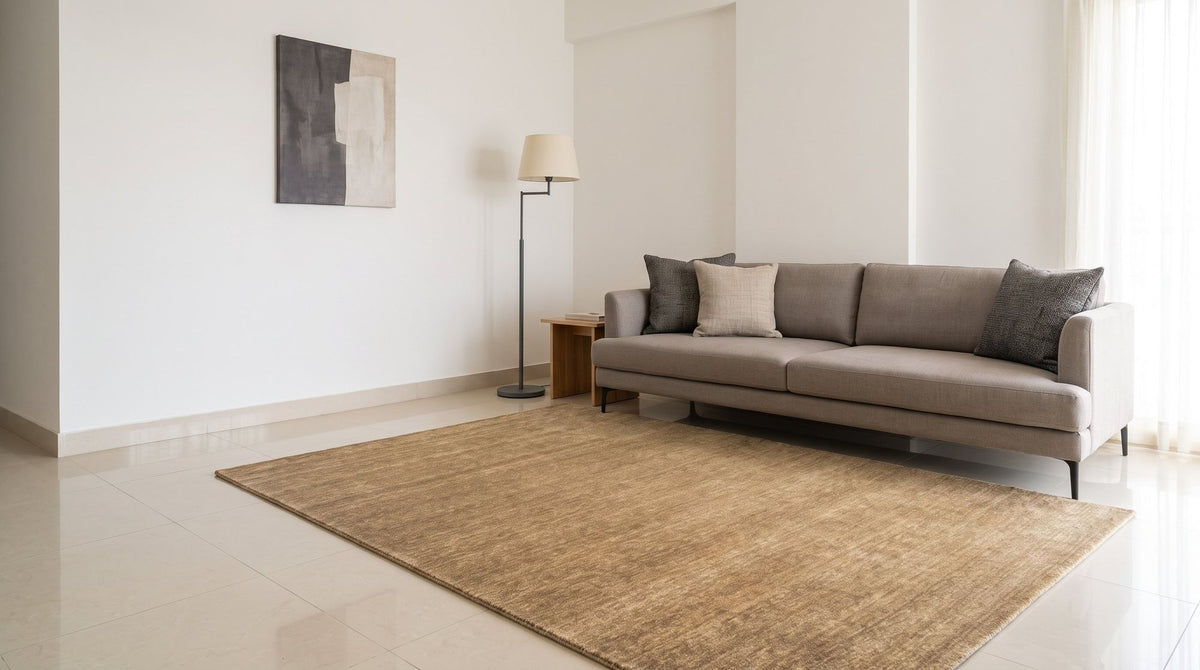
Rug Thickness: Pile Height vs Total Height
Pile height is the soft part you feel. Total height is what decides whether a door clears the rug. Here is how to measure both before you buy.
Read more
Why a New Rug Is Washed Before It Ships
Most handmade rugs are washed once they come off the loom. Here is what that wash does to softness and colour, and why the first monsoon changes a rug again.
Read more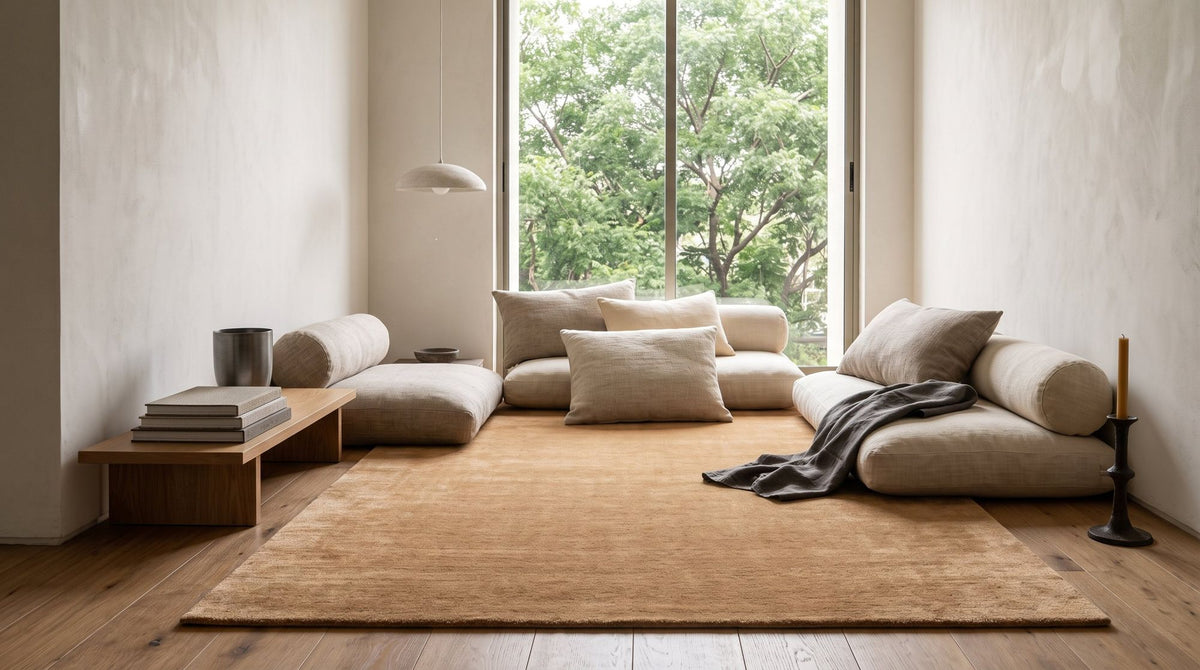
Rug Pile Height in Millimetres
Pile height is the length of the yarn standing above the base of a rug. A few millimetres decide whether a door clears it, how a chair moves and how soft it feels.
Read more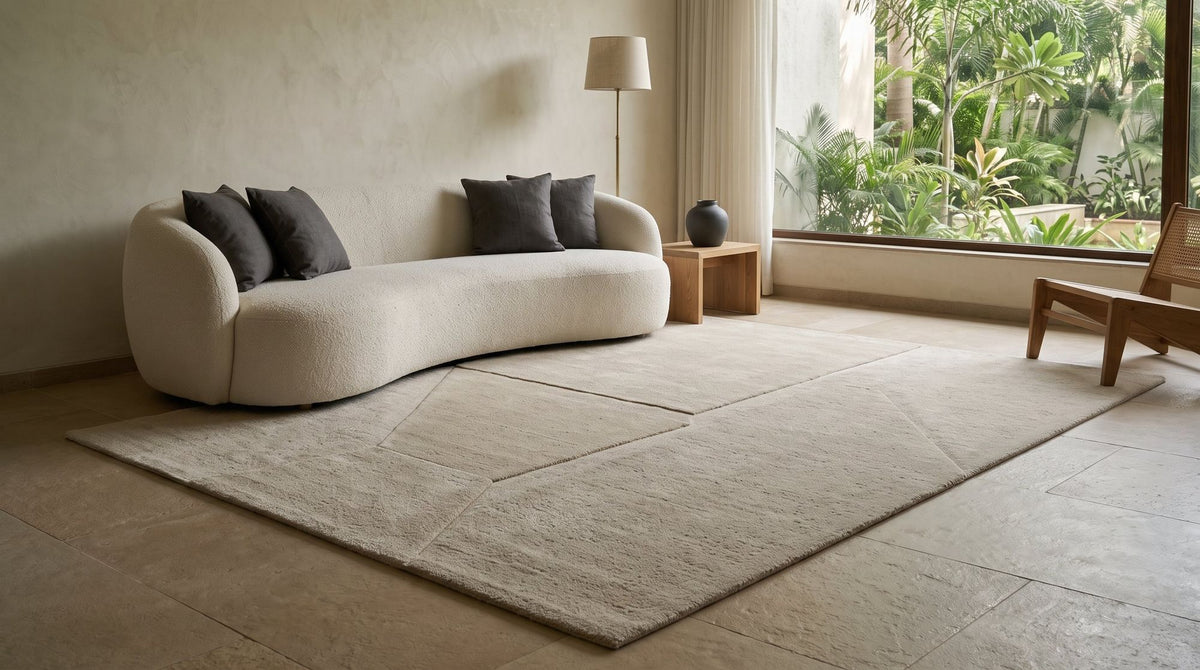
Shearing: How a Rug Gets an Even Surface
Shearing is the finishing step that levels a rug's pile. Here is what it does, and why light fluff in the first weeks is part of a new wool rug settling in.
Read more
Five simple checks at delivery tell you whether a rug is well made: edges, pile, back, smell and how it lies. Here is what to look for.
Read more
Kilim and Flatweave: How They Relate
Every kilim is a flatweave, but most flatweaves are not kilims. Here is the weave that makes a kilim, and how to tell one from a dhurrie.
Read more
Fringe on Rugs: Why Some Have It
Fringe is the warp of a knotted or woven rug, left long past the last row. Here is why some rugs have it, and how it fares in a busy Indian home.
Read more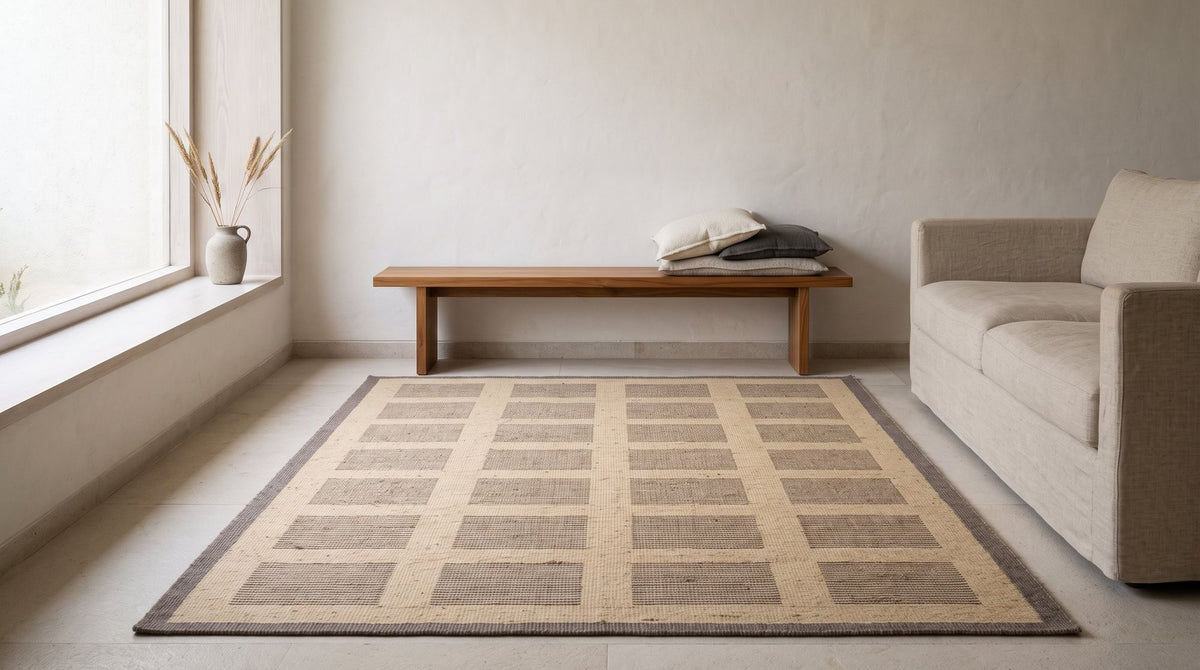
Handwoven Flatweave Rugs Explained
A flatweave is a rug woven from warp and weft alone, with no pile standing up. If you grew up with a cotton dhurrie, you already know the family.
Read more