


What Is Botanical Silk? A Guide for Rug Buyers
Botanical Silk is a plant-based fibre spun into a smooth, bright yarn that gives a rug a silk-like sheen. It is not real silk, which comes from silkworms. Rugberry names it Botanical Silk on every piece that uses it, alone or woven with New Zealand wool, so you always know which fibre you are buying.
In short
- Botanical Silk starts as cellulose, the material in plant cell walls, which is purified and drawn into a fine, continuous filament.
- It has the light and drape of silk at a lower price, but it is softer to crush and more sensitive to water than wool or real silk.
- Rugberry uses Botanical Silk in three ways: alone on the handloom, alone hand tufted, and hand tufted with New Zealand wool.
- A Botanical Silk rug suits bedrooms, formal sitting rooms and quiet corners, and a wool blend suits a living room used every evening.
What is Botanical Silk?
Botanical Silk is a fibre made from plants rather than from animals or oil. Its raw material is cellulose, the tough substance that gives wood, bamboo and other plants their structure, refined into a pulp and then spun as a long, glossy filament.


The filament is far smoother than a wool fibre. Wool has tiny overlapping scales and a natural crimp, which scatter light and give a matt surface. A Botanical Silk filament is almost glassy along its length, so it reflects light in one direction and reads as sheen.
That single property is why designers use it. A small amount of Botanical Silk in a wool rug lifts a line, a motif or an entire field so that it glows when the light moves, while the wool around it stays quiet. Used on its own, it gives a rug the look of a pool of liquid colour.
The rug glossary carries a short definition of the term, and the sheen entry explains why some fibres shine and others do not.
Why is it called Botanical Silk and not silk?
It is called Botanical Silk because it is plant-based and looks like silk, and because calling it silk on its own would mislead a buyer. Real silk is a protein fibre unreeled from the cocoon of the silkworm, and it costs and behaves differently.
The rug trade has used many loose names for plant-based shine fibres, some of which borrow the word silk with no qualifier at all. A buyer reading a listing that says only silk cannot tell whether the rug holds a protein fibre or a plant one, and the difference matters for price, care and where the rug can go.
Rugberry's rule is simple. Where real silk is used, the rug says silk. Where the shine comes from plants, the rug says Botanical Silk, in its title notes, its material details and its provenance card. Product names such as Wool & Silk are the names of designs; the fibre line on each page is the one to read.
The name tells you where the shine comes from: the silkworm or the plant.
How is Botanical Silk different from real silk and wool?
Botanical Silk is brighter than wool, softer to crush than real silk, and the most sensitive of the three to water. Wool is the hardest working, real silk is the finest and dearest, and Botanical Silk sits between them on price with the most visible sheen for the money.
| Quality | Botanical Silk | Real silk | New Zealand wool |
|---|---|---|---|
| Source | Plant cellulose, refined and spun | Protein from the silkworm cocoon | Fleece from sheep |
| Sheen | High, bright and liquid | High, deeper and more layered | Low and natural |
| Feel underfoot | Cool and smooth | Cool, fine and dense | Warm and springy |
| Recovery from crushing | Low, pile marks show | Moderate | High, pile springs back |
| With water | Weakens while wet, can mark | Can spot and lose lustre | Copes well, naturally soil resistant |
| Rugberry example, 5x8 ft regular price ex GST | Nasai Silk Rug, ₹40,000 | Couture Silk Rug, ₹72,000 | Grain Wool Rug, ₹37,000 |
Verdict: choose Botanical Silk when sheen and colour depth matter most and the room is calm, real silk when you want the finest hand knotted piece, and wool when the rug has to work hard every day.
The longer comparisons are in our guides to silk vs Botanical Silk and wool vs Botanical Silk. If you are weighing a shiny synthetic rug against a plant-based one, see Botanical Silk vs polyester.
What does a Botanical Silk rug look and feel like?
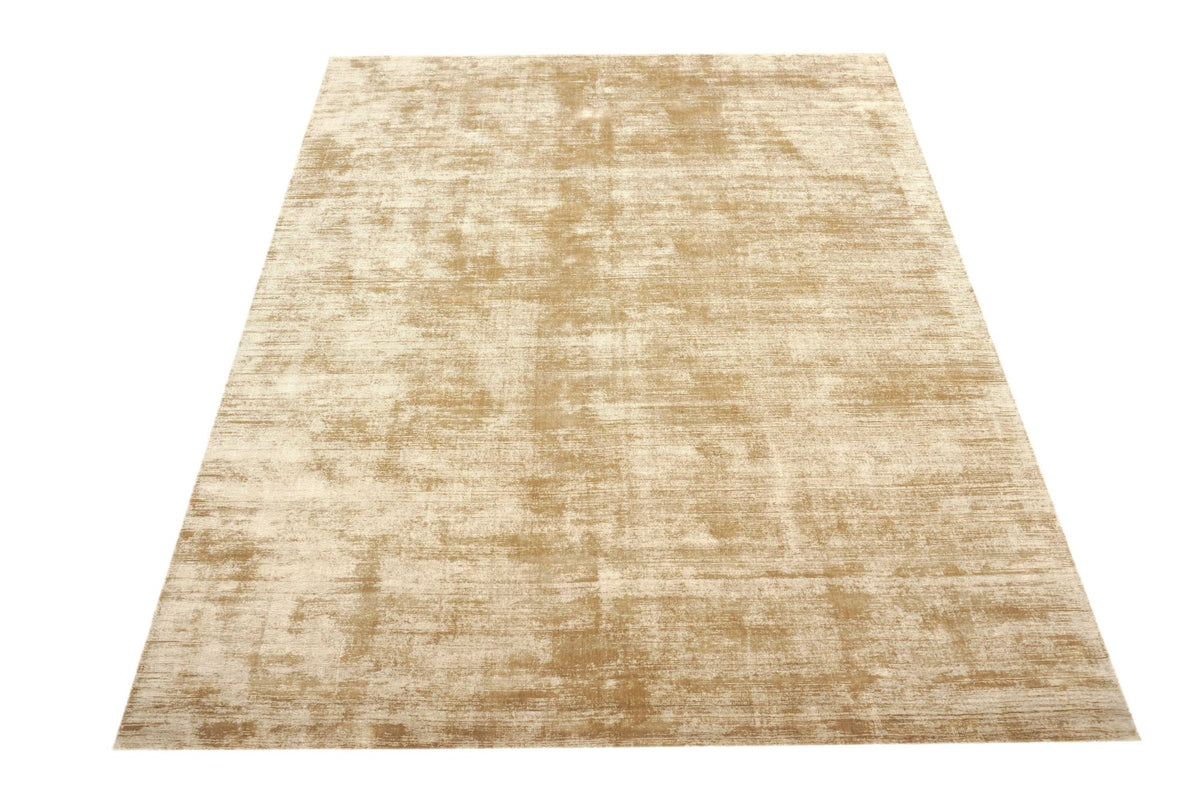
A Botanical Silk rug looks like still water with colour in it: the tone shifts from pale to deep as you walk around it, and the surface feels cool and slippery under a bare hand. It changes more with light than any other rug fibre.

That change has a name. When the pile leans one way it reflects light and looks paler; leaning the other way it absorbs light and looks darker. This shading is the signature of the fibre, not a fault, and it is strongest in plain colours, where there is no pattern to distract the eye.
In practice, a new Botanical Silk rug will show footprints, the outline of a chair that has just moved and the line where the vacuum went. Some people love this living surface; others find it restless. It is worth seeing a swatch in your own light before you decide, which is why the 30 x 30 cm Rugberry swatch, ₹800 and credited against the rug, is a good first step for this fibre in particular.
Underfoot, a pure Botanical Silk rug is smooth rather than cushioned. On a hot afternoon in Chennai or Ahmedabad the cool touch is part of the appeal; on a January morning in Delhi a wool rug feels warmer. Our guide to how light changes a rug's sheen shows how the same rug reads under daylight, warm LED and lamps.
How does Rugberry use Botanical Silk?
Rugberry uses Botanical Silk in three ways: woven alone on the handloom, hand tufted alone into a deeper pile, and hand tufted together with New Zealand wool so that the plant fibre draws the pattern and the wool carries the wear.


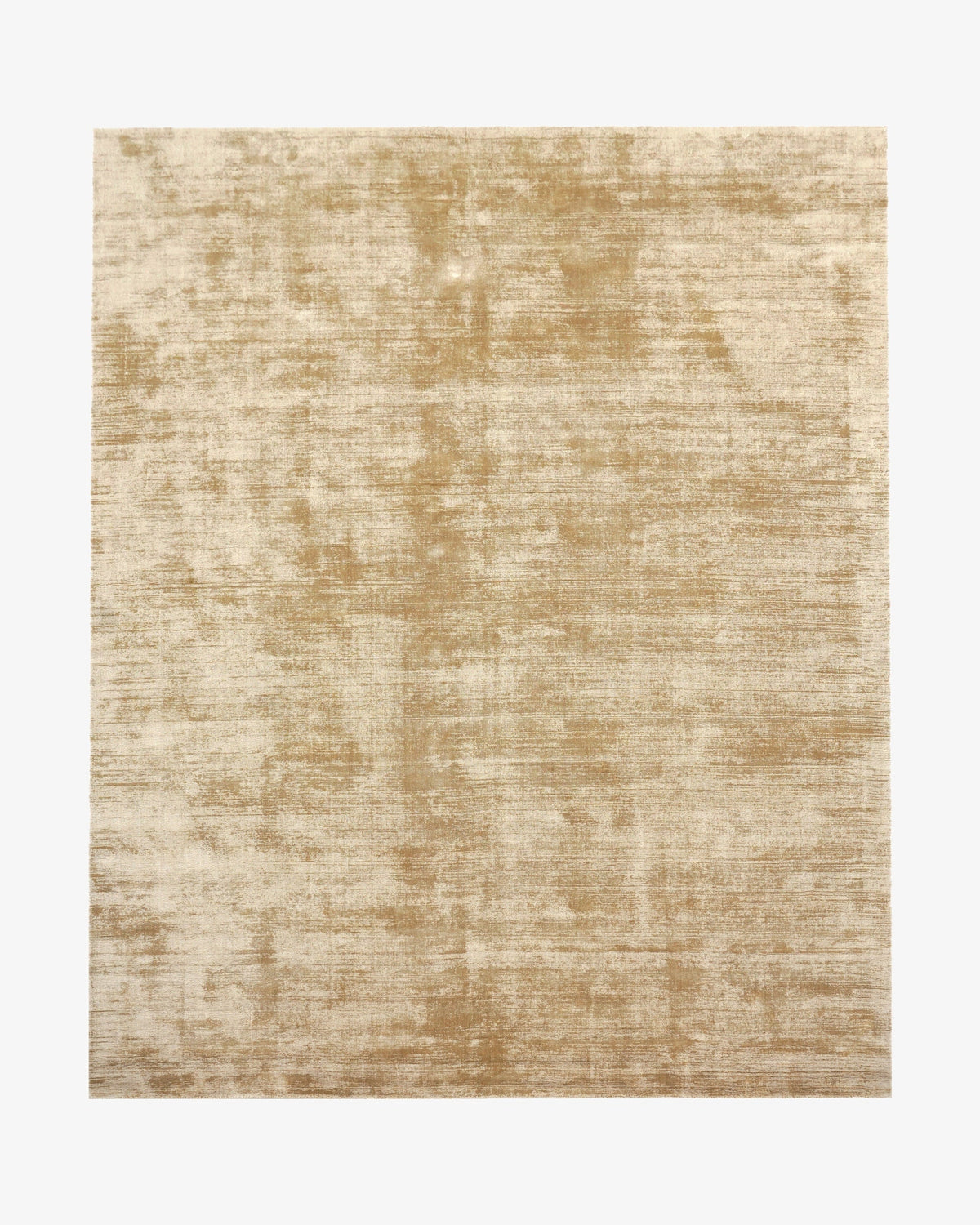
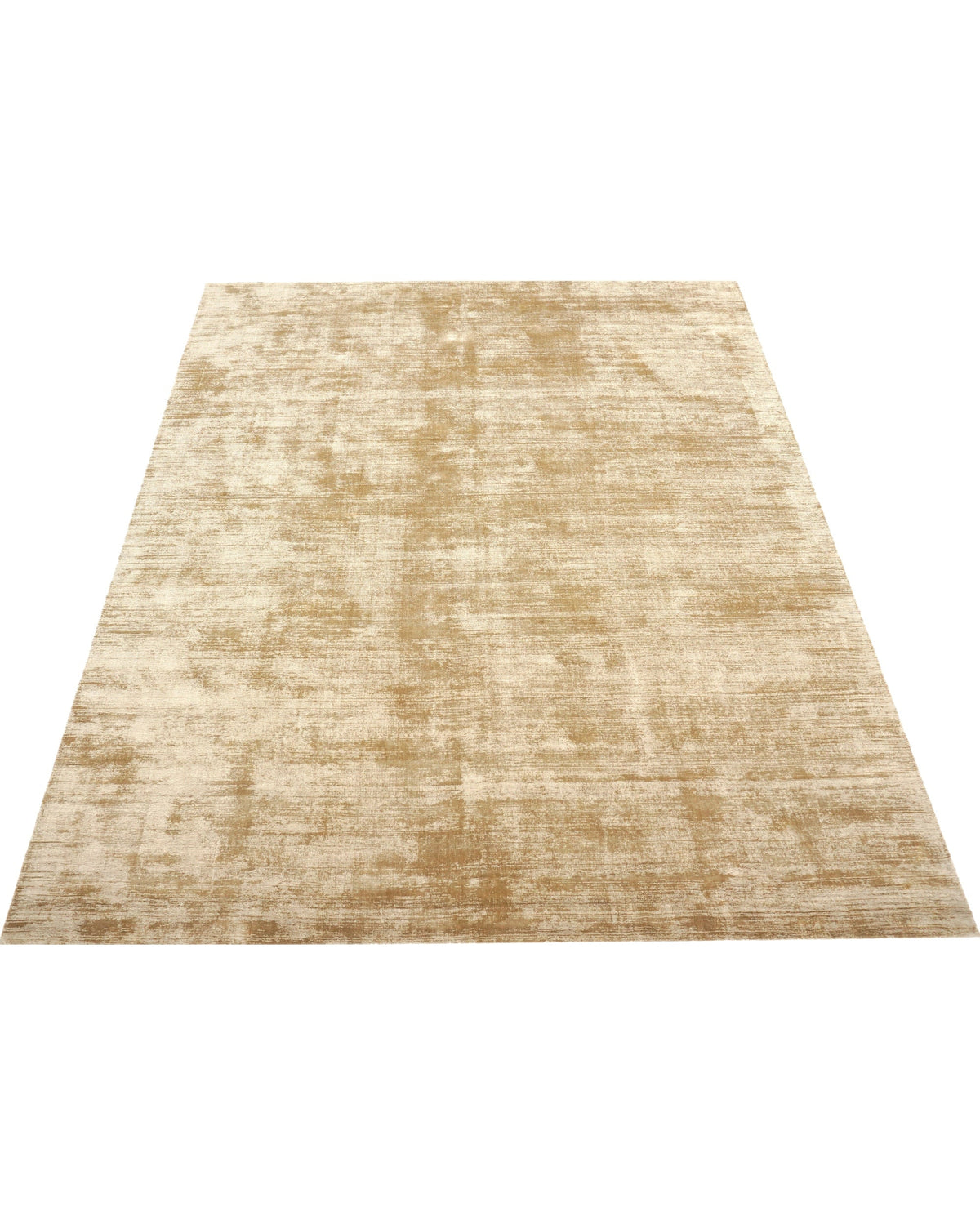
The handloom pieces are the flattest and most liquid. The Luma Silk Rug in Charcoal is handloom woven in Botanical Silk at 10 mm, a deep grey that turns almost silver where the light catches it. Its regular price is ₹40,000 for 5x8 ft and ₹79,000 for 8x10 ft, ex GST at the time of writing. The Nuva Silk Rug in Camel is woven the same way at 10 mm, a warm sand gold with a distressed sheen, at ₹40,000 for 5x8 ft regular price, ex GST at the time of writing. The Luma family also comes in Greige, Gold and Gray, covered in our guide to the Luma rugs.
The hand tufted pieces have more body. The Nasai Silk Rug in Pale grey is hand tufted in Botanical Silk at 14 to 16 mm, a soft grey field with one large, rounded shape in warm sand rising through it. It is ₹40,000 for 5x8 ft and ₹80,000 for 8x10 ft at regular price, ex GST at the time of writing.
The blends are where Botanical Silk does its most useful work. In the Lyra Wool & Silk Rug, hand tufted at 14 to 16 mm, New Zealand wool forms most of the pile and Botanical Silk picks out parts of the design so they gleam against the matt wool. Lyra is ₹40,000 for 5x8 ft and ₹80,000 for 8x10 ft at regular price, ex GST at the time of writing. More of these pieces are gathered in Velocity, Lyra and Trickle and in silk and Botanical Silk rugs.
For contrast, real silk at Rugberry appears in the Couture Silk Rug, hand knotted in silk, ₹72,000 for 5x8 ft at regular price, ex GST at the time of writing. Silk belongs to the Fina grade; Botanical Silk is named separately because it is not one of the nine natural animal and plant fibres in the grade system.
Which rooms suit a Botanical Silk rug?
A Botanical Silk rug suits rooms that rest more than they work: a bedroom, a formal drawing room, a study or a dressing area. A wool and Botanical Silk blend can also take a family living room, because the wool carries the traffic.

Think about three things before choosing a room. First, feet: how many people cross the rug each day, and whether shoes come into the house. Second, water: whether there are toddlers, pets, plants on the rug or a dining table nearby. Third, light: a room with low, raking daylight shows the sheen at its most beautiful and its pile marks at their most visible.
A pure Botanical Silk rug is a poor choice under a dining table, at an entrance or in a home with a puppy, and it should never go on a damp ground floor through the monsoon. In those places choose wool, or a blend where the plant fibre is only an accent. For the full answer on wear, read is Botanical Silk durable enough for a living room.
Once the rug is down, a light routine keeps it bright: dry vacuuming without a beater bar, blotting rather than rubbing, and turning it so the light falls evenly. The full season by season routine is in our Botanical Silk rug care guide.
How can you tell if a rug's silk is Botanical Silk?
The surest way is to read the fibre line on the product page or ask the seller to state the fibre in writing. By eye and hand, Botanical Silk tends to be brighter and more uniform than real silk, crushes more easily and feels slightly crisper when dry.

A simple test you can do with a swatch is the thumbprint. Press a thumb into the pile for a few seconds and lift it: on Botanical Silk the mark stays clearly visible, while wool springs back almost at once. Do not try a flame or a wet cloth on a new rug to find out, since both can damage it and neither is reliable at home.
Price is a rough clue too. A large hand knotted rug in real silk costs a great deal more than a plant-based rug of the same size, so a very low price on a rug sold as pure silk is worth a question. Our guide on how to check what a rug is made of sets out the other checks, from the back of the rug to the documents to ask for.
Frequently asked questions
Is Botanical Silk a natural fibre?
Botanical Silk starts from a natural material, plant cellulose, but it is processed and spun in a mill rather than used as it grows. It is best described as plant-based. Rugberry keeps it outside its three natural fibre grades for that reason.
Is Botanical Silk the same as bamboo silk?
Bamboo is one of several plants whose cellulose can be used for this kind of fibre, so bamboo silk is a related market name. Rugberry uses the single term Botanical Silk and does not claim a particular plant source on its rugs.
Why does my Botanical Silk rug look darker in some places?
The pile has been brushed or pressed in a different direction there, so it reflects less light. It is shading, not dirt or wear. Gently brushing the pile in one direction with a soft brush, or a pass of the vacuum, usually evens it out.
Can a Botanical Silk rug go in a home with children?
A wool and Botanical Silk blend is the safer pick for a young family, placed away from the dining area. A pure Botanical Silk rug is better kept for an adult bedroom or a formal room until the children are older.
Is a Botanical Silk rug cheaper than a silk rug?
Yes, usually by a wide margin for the same size and construction. At Rugberry a 5x8 ft hand tufted Botanical Silk rug starts at ₹40,000 regular price, while the hand knotted Couture Silk Rug in real silk is ₹72,000, both ex GST at the time of writing.
Name the fibre, then choose the room. See the Luma collection and silk and Botanical Silk rugs from Rugberry. Material first.




Leave a comment
This site is protected by hCaptcha and the hCaptcha Privacy Policy and Terms of Service apply.