





Rugberry Journal
Hand Spun vs Machine Spun Yarn
Hand spun yarn varies in thickness and twist along its length, much like khadi. That irregularity changes the texture and colour of a rug. Here is how.
Read more
Turn a rug over and its construction is plain to see. Here is what knotted, tufted and handloom backs look like, and what to check the day a rug arrives.
Read more
Every knotted, handloom and flatweave rug is built on warp and weft, the same frame of threads as a handloom sari. Here is how it works under the pile.
Read more
Why Handmade Rugs Have Small Irregularities
A handmade rug is never machine straight. Here is how to tell expected variation from a real fault, and how to check a new rug fairly when it arrives.
Read more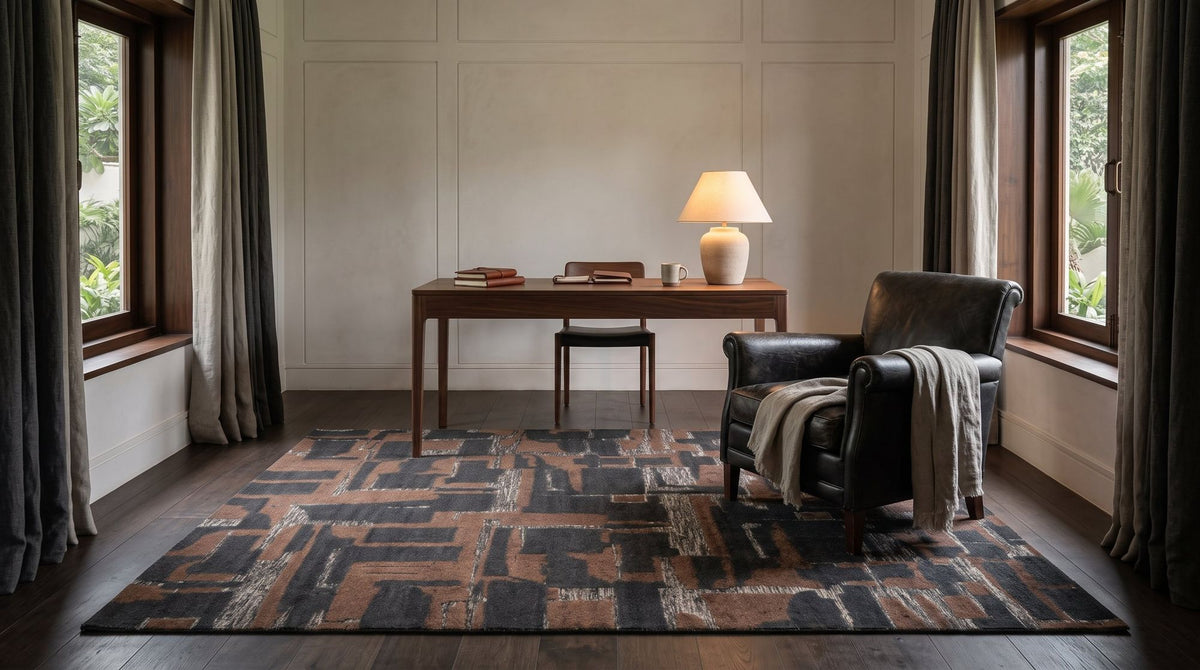
Abrash: The Tonal Shifts in Handmade Rugs
Abrash is the soft banding of tone across a hand dyed, hand knotted rug. Here is what causes it, how it differs from a fault, and what to check on delivery.
Read more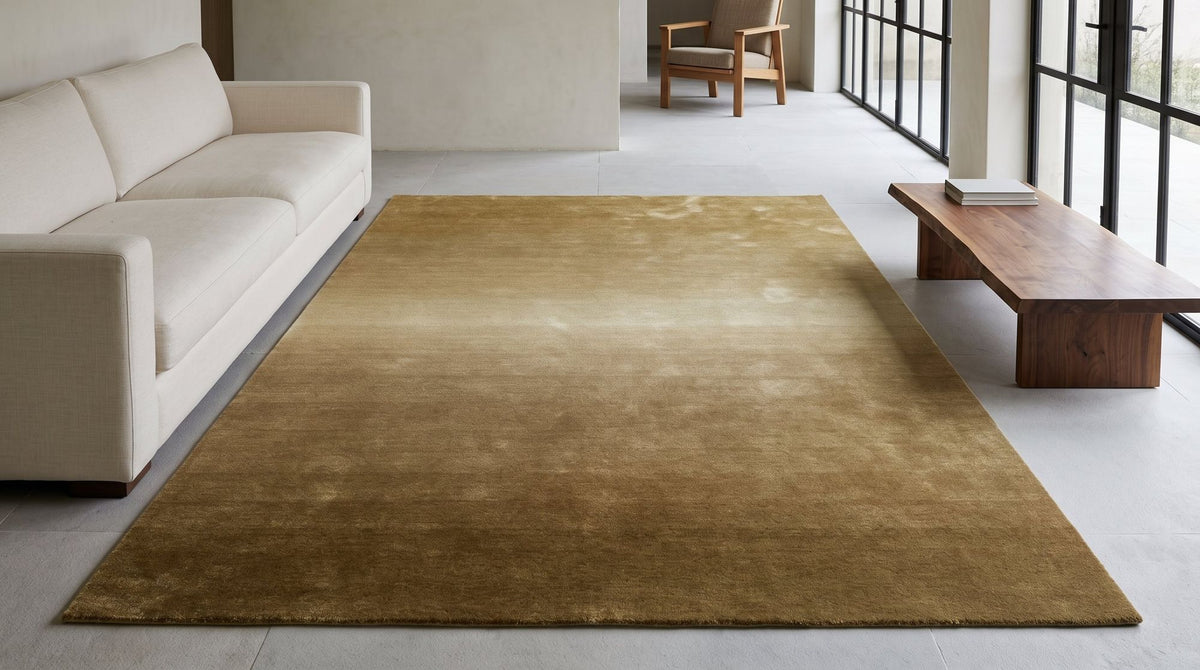
How Wool Takes Colour: Dyeing Explained
Wool yarn is dyed in batches, and no two batches are quite identical. Here is how yarn dyeing works, what a dye lot is and how to plan rugs that must match.
Read more
Which Rug Fibres Are Easiest to Clean
Wool, jute, silk and recycled fibres behave very differently with a spilt cup of chai. Here they are ranked for cleaning at home in Indian conditions.
Read more
Do Jute Rugs Shed: What to Expect
Jute rugs do shed, as short brittle fibre and a fine dust rather than soft fluff. Here is what to expect on a floor that is swept every day, and how to reduce it.
Read more
What Is Jute: The Plant Fibre Behind the Rug
Jute is one of India's most familiar fibres, from gunny sacks to rugs. Here is how the plant becomes a rug, and how it behaves on your floor.
Read more
Why New Wool Rugs Shed and When It Settles
Fluff from a new wool rug is loose fibre left over from spinning, not the rug coming apart. Here is why it happens, what to expect and how to handle it.
Read more