


Rugberry Journal
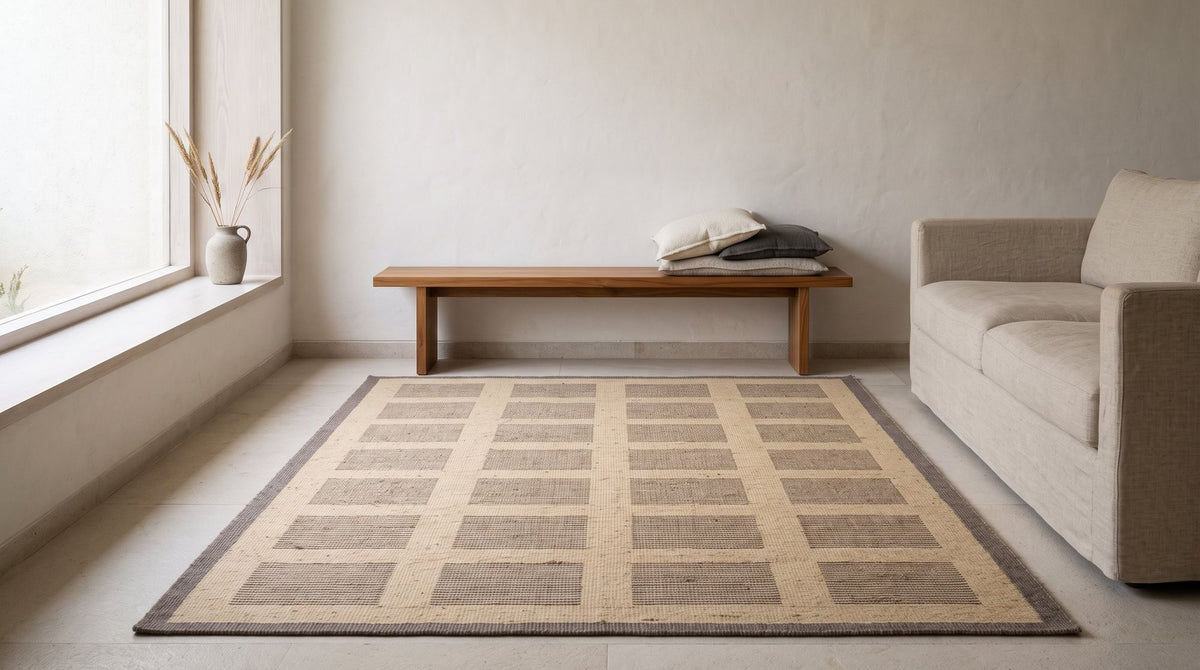
Handwoven Flatweave Rugs Explained
A flatweave is a rug woven from warp and weft alone, with no pile standing up. If you grew up with a cotton dhurrie, you already know the family.
Read more
Wool vs Cotton Rugs: A Practical Comparison
Most Indian homes grew up with a cotton dhurrie. Here is how it compares with a wool rug for feel, spills, washing and wear, and when each is the right choice.
Read more
Dhurrie vs Rug: What Is the Difference
A dhurrie is flat woven with no pile, so it is light, often reversible and easy to shake out. A pile rug is softer and heavier. Here is how to choose.
Read more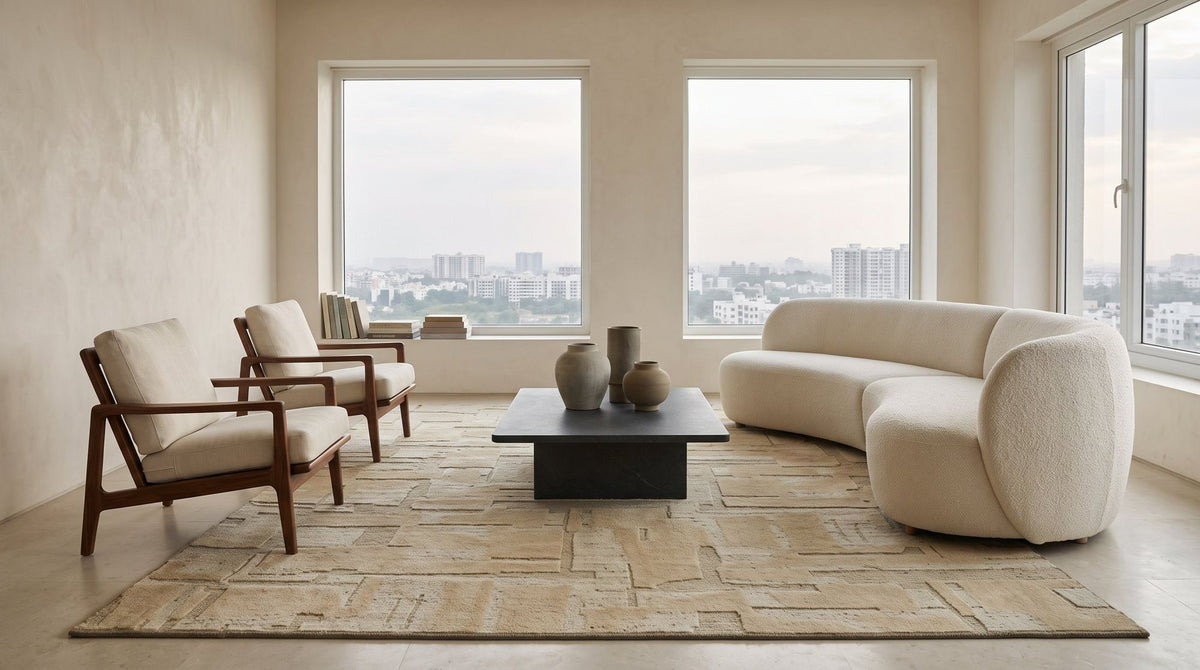
Persian vs Tibetan Knot: What Differs
Both knots tie yarn to the warp, but in different ways. Here is how each is made, what it does to a design and what to ask before you buy.
Read more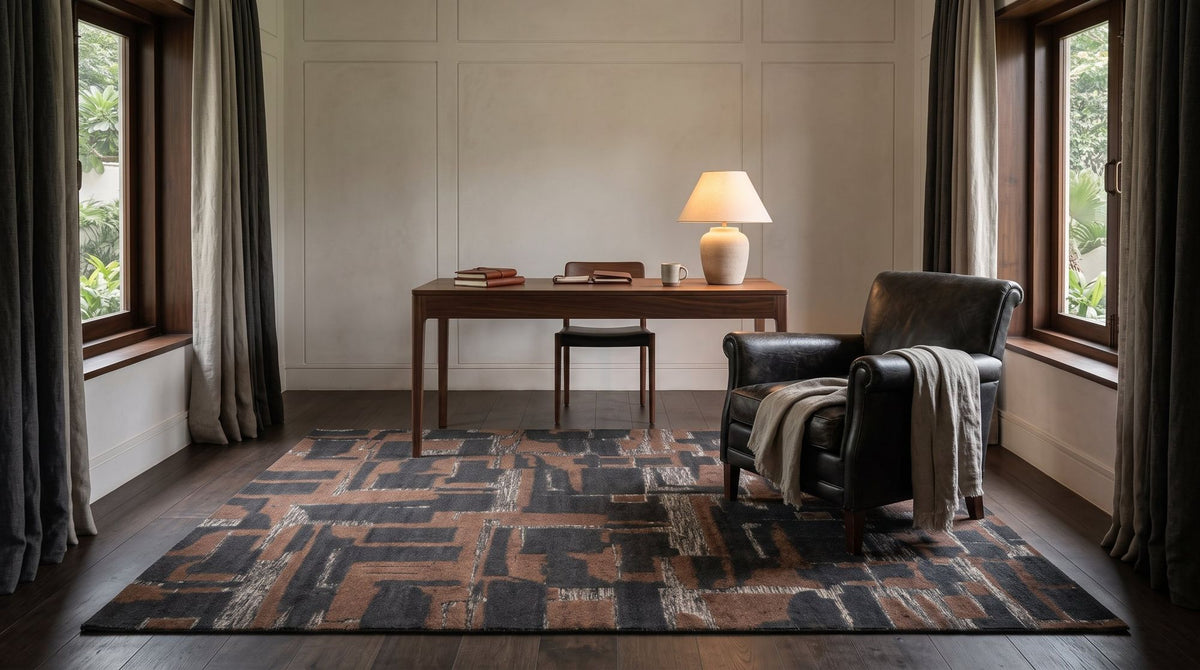
Durability by Construction: Knotted to Woven
Hand knotting is the most durable way to make a rug, but it is not the only sound choice. Here is how each construction ranks, and where each belongs.
Read more
Hand Spun vs Machine Spun Yarn
Hand spun yarn varies in thickness and twist along its length, much like khadi. That irregularity changes the texture and colour of a rug. Here is how.
Read more
Turn a rug over and its construction is plain to see. Here is what knotted, tufted and handloom backs look like, and what to check the day a rug arrives.
Read more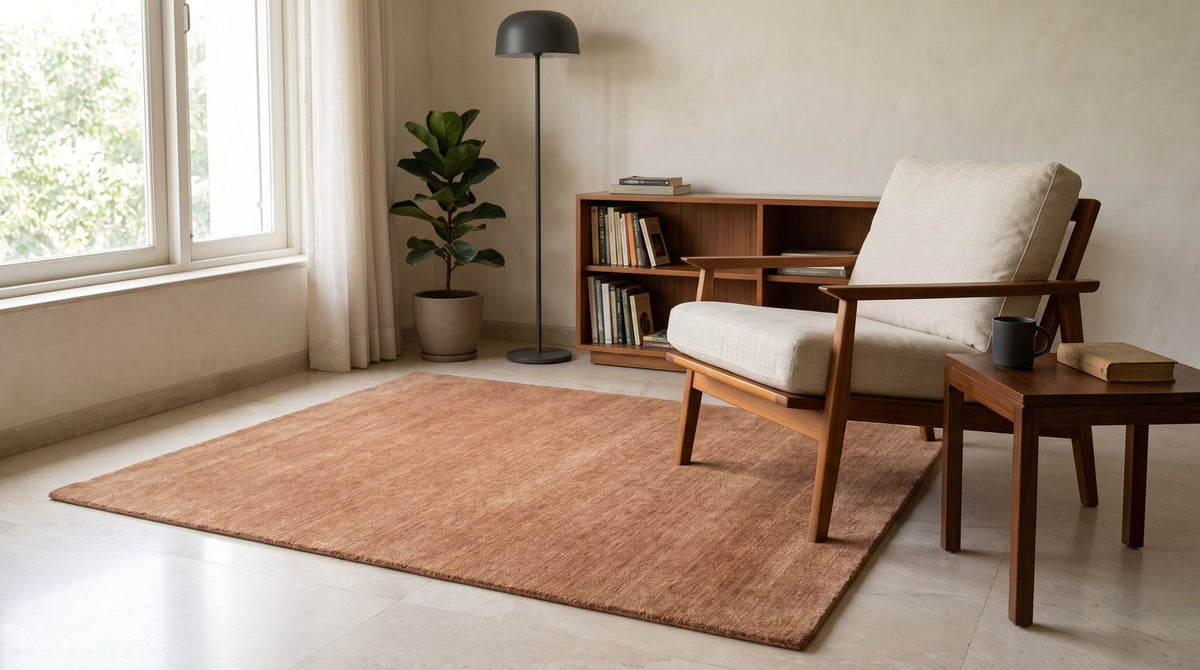
Every knotted, handloom and flatweave rug is built on warp and weft, the same frame of threads as a handloom sari. Here is how it works under the pile.
Read more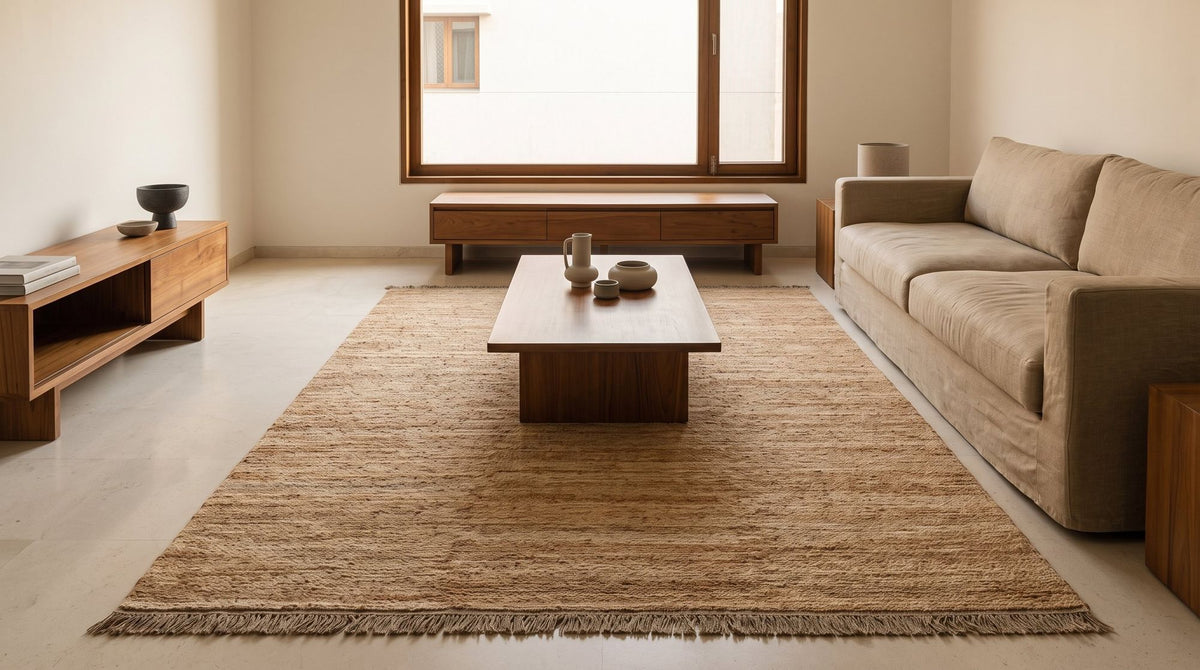
Why Handmade Rugs Have Small Irregularities
A handmade rug is never machine straight. Here is how to tell expected variation from a real fault, and how to check a new rug fairly when it arrives.
Read more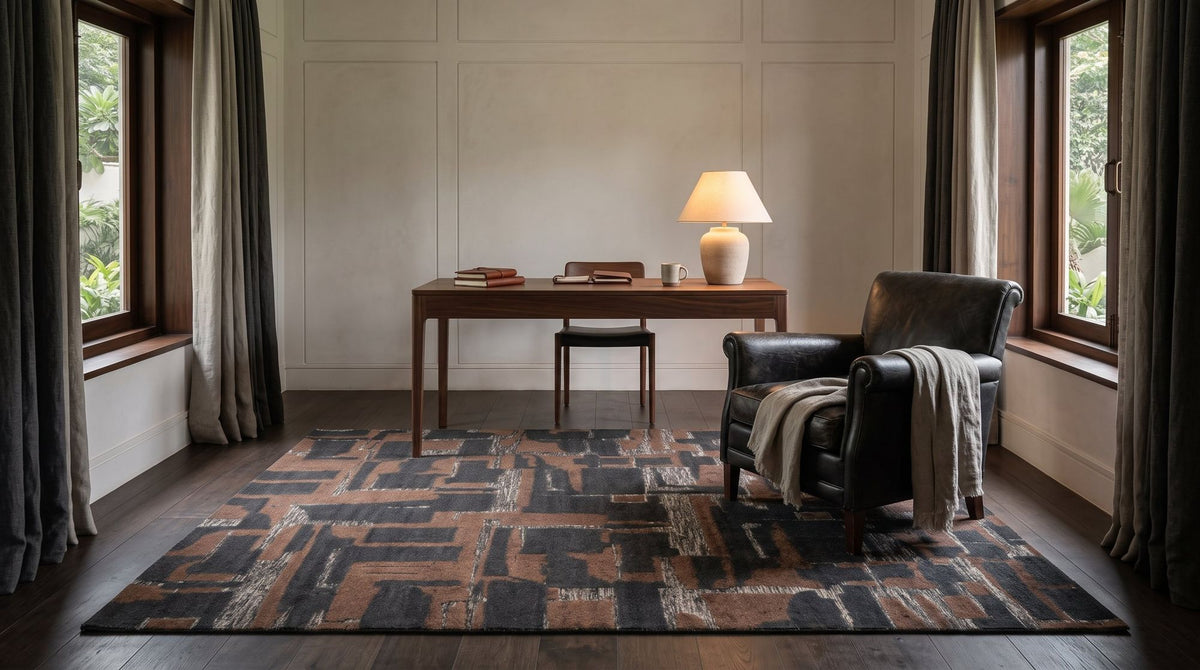
Abrash: The Tonal Shifts in Handmade Rugs
Abrash is the soft banding of tone across a hand dyed, hand knotted rug. Here is what causes it, how it differs from a fault, and what to check on delivery.
Read more